Helping the Unhealthy

In a rural village outside Salem, India, Dr. Siddharthan tried to persuade Shanthi that he could successfully perform the needed eye surgery on her young son and make him see for the first time in his life. “I will send Samuel Stevens to the village and pick up you and your son. He will bring you to the eye hospital. Everything will be fine. Can you imagine how happy your son will be when he sees his mother for the first time? And the whole village will rejoice when they see the great miracle.” 

“No,” said Shanthi softly as she lowered her head and stared at the ground. "I want my son to see, but the people of my village will not hear of any such thing. They have warned me that if you put a new eye into my son’s head he will be forever cursed, I will be cursed and my other children will be cursed.” Shanthi began to shake with fear. “My villagers demand that they like my son just as he is … blind. They want to take care of him all of his life. When he needs them to help him walk or eat it makes them feel very good and important. They want him to depend on them forever. They will not allow me to bring my son to your hospital.”

It was decided by Samuel Stevens and Dr. Siddharthan, however, that the day before the surgery Samuel would drive to the village and try to persuade Shanthi to allow the surgery to take place on her son. I was invited to go with Samuel and meet Shanthi and the villagers. When we met with Shanthi she began to cry openly. The previous night she had a dream. She saw a man come and take her son away and later he brought him back to the village … and he could see! She had never seen Samuel before but he was the exact man who had come in her dream for her son. “I do not need to come with you” she said. I know that when I see my son again he will see perfectly!” 
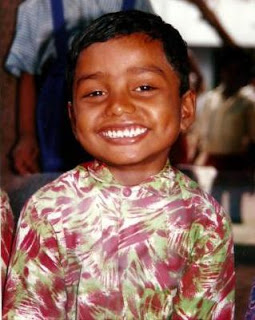
And indeed, when he returned to the village, he could see perfectly. Oh, what a day of celebration!

On my airplane ride back from Salem and Coimbatore to Madras, India, I began to search my own heart. “Are there people or situations in my life where I am encouraging unhealthy dependence?” The villagers wanted Shanthi’s son to stay blind because it made them feel good and needed. What a tragedy that would have been. Who or what in my life do I need to relinquish in order for someone else to become healthy.


I did something...I made YOU!

During one of my trips through Asia a friend of mine shared with me an intriguing episode: 

"Past the seeker as he prayed came the crippled and the beggar and the beaten. And seeing them, the holy one went down into deep prayer and cried, “Great God, how is it that a loving Creator can see such things and yet do nothing about them?” 

And out of the long silence, God said, “I did do something . . . I made you.”

I am curious as to how our inherited culture has allowed for us to so inconspicuously and gracefully slide out from under the regard for personal responsibility and engagement. I sometimes catch myself asking with an air of entitlement, “Why doesn’t somebody, or the government, do something about all these glaring problems?” 

I love working with entrepreneurs, be they economic or cultural entrepreneurs, because they possess a refreshing disposition of personal accountability. The very concept of “entrepreneur” embodies the notion of personal responsibility and accountability. I love it when an individual citizen steps up and says, “Yes, I can do that. I can come up with a solution to that problem. I can fix that so that everyone else is better off.”

Perhaps, the best-known social entrepreneurs are Bill and Melinda Gates, the founder of Microsoft, and his wife. The Bill and Melinda Gates Foundation funds many worthwhile causes, particularly in the fields of disease prevention and education. The Gates generation decided to use the expertise they had gained from the business world in addressing the world’s most intractable problems: poverty, disease, inadequate education, and corruption in government. They had learned the principles and effectiveness of economic globalization. Goods and services could be invented in the intellectual capitals of the world. The raw materials of these goods could be drawn from many nations, manufactured in others, and shipped around the world. The whole process could be tracked with uncanny precision by software that could put factories in Macao into overdrive when inventory ran low in Dubuque.

Marketing studies based on data mining or focus groups improved the development of goods and services, making the marketplace ever more responsive to peoples’ needs. Why not apply the principles that made the global market place so efficient to the world’s most difficult problems? Instead of the temporary fix of most humanitarian programs, why not use the tools of technology and global commerce to mitigate, or even solve, age-old problems.

The essence of social entrepreneurship—as with all entrepreneurship—lay in the reallocation of resources so that everyone would be better off. Our Project C.U.R.E.business model, for example, uses overstock medical goods to improve the health care of developing nations. Our collection, shipping, and distribution operations are prime examples of how to use economic globalization for good. The wave of social entrepreneurship that came out of the 1990s was a wonderful development. It reestablished in the public imagination that a person could do well in business in order to do good deeds in the world. It also spoke to the issue that God made us with a most unique possibility of partnership and accountability in the pursuit of discovering answers for today’s overwhelming needs.


Building a "Business of Goodness"

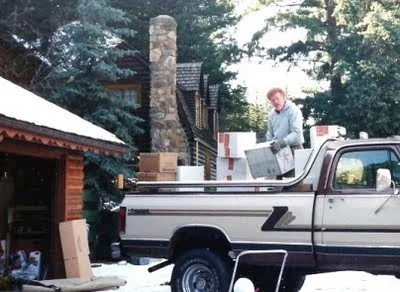
Our first load of donated medical goods was delivered into Brazil, in 1987. We mark that as the official starting point of Project C.U.R.E.

By then I could see why I had been set on a course that had taken me into lesser-developed countries. That would be my work venue for the future. And I could see why I had been introduced to top leaders and influ­ential people in countries of North America, Africa, and South America. Those were the people I would be working with for a long time to come on behalf of the less fortunate. I couldn’t necessarily see all that was taking place at the same time it was hap­pening. But as soon as the first ocean-going cargo container loads were sent into Brazil the pieces of the mosaic started coming together, forming a dazzling, multi-faceted picture that caught the light of eternity.

I also began to see what an incredible difference the donated medical supplies had made. It was too soon to judge the effect the donations would have on the hurting constituents of Brazil, but I could see what we had gotten hold of was dynamite. The energy level of the entire university medical campus, where we had begun sending medical goods, as well as Dr. Neves’s little clinic in Mesquite, had jumped to unbelievable heights. And we had just started.

In my quiet times, I would reflect on what had happened since I had started the adventure of relinquishment. I was not lying awake at nights any more worrying what I would do if I made a miscalculation and ended up los­ing all my personal wealth; we had given it away. I was not concerned any longer that my personal value might be tied to some show of wealth. I was amazed that I was no longer being driven by the addiction of personal accumulation. I didn’t need to put together one more, yet bigger, business deal. My motivations were being profoundly changed.

I could now see what I would be doing for the rest of my life: I would be taking the areas of my life where I had strong affinities and abilities, and spend my time using those to help other people who were less advan­taged. I would not only give away my personal accumulation of wealth but I would also give away myself.

The phrase kept coming to me that I was now building a “business of goodness.” 
 

It seemed to me that the door was wide open for a smaller, leaner international organization to become excellent in the particular niche of improving worldwide health care. Small agencies by them­selves could not end world poverty or resurrect broken health care systems, but they could be powerfully effective in meeting the desperate needs of the poor and sick by providing hope and new opportunities to needy medical institutions and discouraged doctors.

Around this time, I also began discovering something else—something personal: I was beginning to sense a deep feeling of joy and fulfillment. As I began to see the pieces of the desired mosaic coming together, I experi­enced a strange new energy and creativity. I told Anna Marie that I was becoming the “happiest man in the world.”


Living Outside Yourself: The Armand Hammer Story

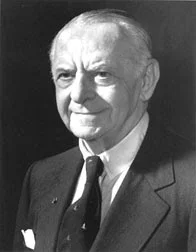
The story of Armand Hammer affected my early life. He was a hero to me. I have always admired him as one of history’s finest “deal-makers” and creative entrepreneurs. He believed that we are here to do good and that it is the responsibility of every human being to aspire to do something worthwhile, to make the world a better place than the one he found. 

“The first thing I look at each morning,” declared Hammer, “is a picture of Albert Einstein I keep on the table right next to my bed. The personal inscription reads, “A PERSON FIRST STARTS TO LIVE WHEN HE CAN LIVE OUTSIDE HIMSELF,” in other words, when he can have as much regard for his fellow man as he does for himself. 

While in medical school he had taken over Allied Drug and Chemical Company, salvaged it from bankruptcy and built it into a respectable business of 1500 employees. Before he began his internship at Bellevue Hospital in 1921 Hammer sold his company for $2 million and traveled to Russia for 6 months where they were experiencing a terrible typhus outbreak following the bloody Bolshevik revolution. Once in Russia, they invited Hammer to join a small team of advisors traveling for three days into the Ural Mountains to assess the starvation, sickness and dying. The trip changed his life. He asked one of the local officials how much grain it would take to feed the starving people? “A million bushels,” was the reply. Grain was selling at the time for $1 a bushel. So, Armand Hammer agreed that he would take his own money and buy the necessary grain. Word of the offer immediately hit the desk of Lenin in his office in Moscow. He fired off a telegram to the official: 

“What is this we hear about a young American chartering grain ships for the relief of famine in the Urals?”

Replied the official: “It is correct.”

Lenin: “Do you personally approve this?”

Official: “Yes, I highly recommend it.”

Lenin: “Very good. I shall instruct the Foreign Trade Monopoly Department to confirm the transaction. Please Return to Moscow immediately.” 

At Armand Hammer’s meeting in Moscow, Lenin picked up a copy of the Scientific American magazine that he had been reading. Even though he deplored the capitalism of America, yet he realized that Russia would not ultimately make it without “inventions, machines, and development of mechanical aids to human hands. Russia today is like your country was during the pioneer stage. We need knowledge and spirit that has made America what she is today . . .” 

Lenin and Armand Hammer became good friends and Lenin moved Hammer to the “Sugar King’s Palace” across from the Kremlin. Later, Armand Hammer was granted by USSR exclusive concessions for the importing of products from thirty eight American companies, like Allis-Chalmers, Ford Tractors, U.S. Rubber, Underwood Typewriters and Parker Pen. He bartered Russian furs, caviar, minerals and lumber for the hard currency that was necessary to finance the operations. Armand Hammer’s desire to make others “better off” changed his destiny: “Life is a gift” he would say, “and if we agree to accept it, we must contribute in return."


The Despair of Selfish Accumulation & the Joyful Adventure of Relinquishment

One of the greatest gifts I ever received was the classic economic concept of “scarcity, choice and cost” at a relatively early point in my career. I was able to grapple with the concept of “how much is enough?” I was confronted with the ideas of sustainability, balance and relinquishment in my own life. 

The theory and art of accumulating assets and the acquisition of influence and power have become the curriculum and catechism of my culture. Rank materialism drives and shapes the behaviors of our business communities and entertainment enterprises. That same spirit of accumulation and power even drives and shapes the entitlements of the welfare state. Greed, advantage, and one-ups-man-ship are what we eat for breakfast.

I realized that just because I had the abilities to earn and accumulate wealth for myself wouldn’t necessarily make me a happy man. Often, my mind would go back to the stories of my childhood heroes introduced through the books my mother read to me. Those heroes seemed to be a happy lot because they “did well” in order to “do good.” I was doing really well but I wasn’t necessarily doing good. In the deals I was putting together everybody was ending up better off—financially. But I wasn’t helping them be better people—or myself, for that matter.

In our business dealings we ended up with a lot of high energy, testosterone-driven moguls as partners. They were fun to be with but the more I studied them the more I concluded that they were not happy people either. None of them had successful home lives. I was painfully coming to the realization that I had been sold a false dream. Whatever it was that we were all chasing would never be caught. I fought tooth and nail to keep from reaching that conclusion. In my quiet times, however, I had to admit such compulsive behavior made me an addict. I was addicted to the accumulation game. I was doing well, but I wasn’t doing good!

In the process something transformational happened at my core. I began to see the futility of trying to accumulate enough material things to make me happy. At that point I was open to a more excellent way. I was ready to pursue goodness and abandon self accumulation. I never took a vow of poverty or promised to wear a hair shirt. I just wanted to break the addiction to the power of selfish accumulation. From that time on, I have actively and sincerely tried to pursue the concepts of sustainability, balance and “relinquishment.” I changed from a person bent on “getting” to a person bent on “giving.”


I began learning how to take my hands off the things that would last for a short time so that I could lay hold of the things that would last forever. The best business trade I ever made was to exchange what I could not keep for what I could not lose.