Challenges (Part I)

You should never underestimate the challenge you are facing or your ability to deal with it. Challenges seem to have a way of discovering, as well as developing, latent inner strengths and abilities that had been hiding within you prior to a particular adversity or challenge. When I was growing up, a fellow named Art Linkletter had a television show where he used to say, “Things turn out best for the people who make the best of the way things turn out.” I think he was on to something.

The blind author and intuitive philosopher, Helen Keller, once reminded us, “Character cannot be developed in ease and quiet. Only through experience of trial and suffering can the soul be strengthened, ambition inspired, and success achieved.” I remember a life threatening situation I encountered in the rugged Himalayan Mountains of northern India that didn’t just challenge me, but nearly frightened the Scotch-Irish machismo out of me.

I had been requested to travel from Denver to Frankfurt to Delhi, then transfer onto Jagson Airlines to be delivered to the Kullu Valley in the far northwest corner of India. My destination was a city called Naggar, where I was to assess the Shamballa hospital and several clinics that had requested donated medical goods from Project C.U.R.E. With all of the airline transfers, they had successfully lost every bit of my luggage, and I left Delhi with only the shirt and pants I was wearing, and a familiar but empty promise, “We will locate your luggage and forward it to you right away.”

My hosts in the Kullu Valley were Dr. Jatinder Singh and his Hungarian-born wife, Dr. Wangmo. They were a delightful couple having come to serve the neglected Himalayan people of Northern India, Tibet, Southern China, and Kashmir. The warm welcome I received from the doctors and townspeople of Naggar and Ghordor had moved me to tears.

After completing the assessments of the hospitals and clinics, doctors Singh and Wangmo asked, “Don’t you people ski a lot in Colorado? We have a bit of time right now, would you like for us to show you our ski area up on Rotung Pass?” I hesitated. I had borrowed a denim shirt and an ill-fitting pair of pants from Dr. Singh that morning because I still had no luggage. “I don’t think I am prepared to visit a ski area with only a thin pair of pants and a light shirt. Do you think I am dressed properly?” “Oh, yes,” they chimed in, “we will not get out of our Gypsy 4x4. We will just go to the top of the pass and let you see; then we will come back down. You will be fine.”

It was May 17. Rotung Pass didn’t usually open until late June or July, but the road up to the gate of the pass had just been opened. The people from all over blistering hot India wanted to go play on the left-over glaciers and wade in the cold streams. The narrow military road up the pass was crowded with old buses, taxis, and dilapidated cars, puffing and chugging in the high altitude. People coming from as far away as Delhi and Hyderabad, who had never touched or seen real snow before, were competing to get to the glaciers to play. It made no difference that there were no ski lifts, gondolas, or rope tows. The crowds just wanted to touch cold snow.

It was a beautiful day. The doctors insisted we stop and buy fried bread and onion sandwiches and Coca-Cola from the maverick vendors. While we were eating, the temperature began dropping quickly. The doctors told me that when they first came to the area they had started their medical work on the north side of the Himalayas. “You just drive down the other side of the twelve-thousand-foot Rotung Pass, along the high valley floor, and go over a sixteen-thousand-foot pass called Kunlom Pass and down into the Spiti Valley in old Tibet.

“Dr. Jackson,” Dr. Singh excitedly announced, “we need to help our friends over in the Spiti Valley, and since you only send things after you personally assess a facility . . . we will never be closer to them than we are right now. We could hurry and be in the Spiti Valley, spend the night there, meet our friends, check the facilities, and be back to the Kullu Valley by tomorrow.” 

“But,” I inquired, “how do you propose getting by that military guard standing at the gate? He is not allowing anyone to get through and go down the other side of Rotung Pass. Furthermore, I only have a thin shirt and a pair of your pants with legs that are too short.” “No problem,” was the reply. “The Gypsy 4x4 is warm and we will be inside until we arrive at Kaza in the Spiti Valley.” With that, Dr. Singh jumped out and ran over to the soldier guarding the gate. He returned with a smile. There hasn’t been as much snow recently and just today some trucks have been over the pass to take supplies into the Spiti Valley.” The guard had recognized Jatinder Singh as a doctor and had given us permission to go.
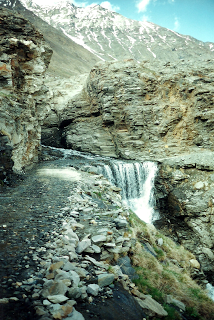
About halfway down Rotung Pass we encountered a slight problem. A glacier had slid across almost the entire roadway. We stopped and sized up the situation. Dr. Singh felt that as long as he could keep his downhill set of tires on the gravel roadway, the other set of tires could run up onto the glacier pack and we could pass by safely. Dr. Singh had to keep a good balance to the movement of the 4x4. He couldn’t go too slowly or he would lose his momentum and we would be stuck on the upper side in the snow. And he couldn’t go too fast and run the risk of putting the 4x4 into a slide off what seemed to be a never-ending drop from the downside to wherever the bottom was twelve thousand feet below.

The first fifteen yards went quite well. Then the road base on the downhill side gave way. We had been hoping to count on the road base as our security, but the glacier melt had run underneath and softened the base. Suddenly, I felt the right rear corner of the 4x4 swing downhill, and the left front corner where I was sitting (since India’s cars all had right-hand drive) began to get higher and higher in the air. Dr. Singh let off the gas and we sat perched teetering on the edge with the front left tire three feet off the ground. Everything was in slow motion and I fully expected the 4x4 to just slowly roll on over down the side of forever. I admonished Dr. Singh and Dr. Wangmo to move very gently and try to exit on the uphill side, being careful not to get beneath the auto in case it should roll on over.

Once we were safely out, we had a better chance to consider our plight. The wind had built up measurably and caused a teeter-totter effect on the auto. I told the doctors that our very best chance was to wait for a large India truck to come up the hill from down below and hook on to the front of the 4x4 and gently ease us back onto the glacier and roadway. Dr. Singh, an athletically modeled Indian, wasn’t going to wait for anything. He took off running down the road to seek help. We watched as he took shortcuts down the mountain face, dropping from one road to the next road level instead of running the full distance of the switchbacks. 

While Dr. Singh was gone, we discovered that there weren’t going to be any big trucks coming on the road past us. We were on a by-pass road and the trucks were going on a different military road. By that time, the clouds were moving down from the summit and the wind was acquiring a sharp bite to it. I started looking for some shelter on the bare face of the twelve-thousand-foot mountain pass. What would I do if we were required to spend the night with no food, fire, or protection?

Returning to the Gypsy 4x4 for warmth or protection would not work. About the time I would get tempted to consider crawling back into it, the wind would come up and the 4x4 would start rocking and teetering, and the front left wheel would go higher. The Gypsy could tip in the wind and go plummeting down at any second with absolutely nothing to stop it. The wind continued to pick up, forcing the clouds down from the top of the mountain to where we were, making a cold fog. 

Dr. Singh had run downhill far enough to find a road workers’ camp. He grabbed six workers there and flagged down a truck driver. The truck eventually got to us, but there were at least two immediate problems. The truck could not get any closer to the 4x4 than about fifty yards because of the soft roadway and the piled snowpack. The other problem was that if we weren’t careful, the vibration from the big truck could get the glacier moving again across the roadway. The moving glacier would simply sweep us all off the face of the mountain. 

Several of the men went carefully to the lower corner of the 4x4 and gently pushed up. As they lifted, other men stacked rocks below the wheel. They repeated that process until they had built a base. I was on the front corner of the vehicle trying to add my weight to the leverage. Without a hydraulic jack or a pry bar or a long, wooden pole or any other scientific advantage, the Himalayan mountain men picked the vehicle up about six inches at a time until it was once again level.

The road workers who were chopping at the snow had by then cleared about three or four feet of the glacier for the entire fifty-yard length. Then it was time for Dr. Singh to try his skill at driving the rig back along the ledge to the other side of the glacier.

Experience is not what benefits a person; rather, it is what that person does with the experience that makes the difference. I have learned not to necessarily pray for an easy life, but to pray for wisdom and strength to handle the life dealt to me. What would wisdom suggest we do to get off the face of that treacherous, freezing, Himalayan Mountain?

(Continued next week . . . January 22, 2013)


Follow Your Heart

Jacob Petrovic was my friend. I knew him by his Americanized name, “Jim Peters.” He knew his life was limited and didn’t want to waste a single moment living someone else’s dream. He had dreams of his own, courage enough to follow his heart, and sufficient confidence to trust his seasoned intuition. Jim wanted to return to the unstable federation of Yugoslavia, but the civil war, the bloodshed, and violence made the political climate throughout the Balkans extremely tentative.

Ralph Waldo Emerson once advised, “Beware what you set your heart upon, for it surely shall be yours.” For over fifty years Jim had his heart set upon returning to his birthplace in Belgrade, Serbia. Jim was sitting in the audience where I had just delivered a presentation on my recent trips into North Korea and Iraq. He approached me: “You have been to Bagdad, Iraq; Havana, Cuba; and Pyongyang, North Korea; have you ever been to Belgrade, Serbia, in Yugoslavia?”

“No,” was my answer. “Why not?” was his rapid response. “Because Project C.U.R.E. only goes where we are invited,” I answered. “Then would you go to Belgrade if you were invited?” Three days later the two of us met in my office to discuss the possibility of traveling together to arrange for needed medical goods to be donated to the hurting people of Yugoslavia.

This was not the first time Jim Peters had followed his heart where there was no pathway to lead. But he had learned early that wherever you go it is necessary to go with all your heart, because the intuition of the heart has reasons that even reason does not necessarily understand. Jim had escaped Yugoslavia in 1944. Germany had wreaked havoc on the Balkans during the First World War. Then, during World War II, Germany, Italy, and Russia had exercised their special cruelty on the area.

Young Jacob Petrovic and his brothers were part of a prominent Belgrade family. They had joined up with the resistance movement to try to protect their homeland from the Nazis and Communists. When Allied pilots from America or Britain got shot down over Yugoslavia, the resistance group would try to get to the pilots first, and through dangerous and clandestine strategies eventually return the pilots back across the enemy lines to the safety of the Allied troops.

Jim and his friends had been able to save the lives of over 200 American and British pilots. But, eventually, the Gestapo closed in on them and they had to flee the country without even saying goodbye to their families. The soldiers had surrounded the family home. They were in the process of breaking down the doors to capture Jim and his brother with orders to bring them in as prisoners or shoot them on the spot if need be. Jim and his brother sought the help of a school girlfriend who was also in the opposition movement. She successfully hid them in her house. That night they escaped. They were able to slip from her house, jump fences, and run into the nearby forested hills. It took over two years for them to complete their escape by working their way eventually to Switzerland. Jim continued to follow his heart.

While in Switzerland, two of the American pilots whose lives they had saved, searched for them, miraculously located them, and brought them to America. They landed in New York in 1947.The very first day they arrived they found jobs and went to work. The pilots, whose lives had been saved, sponsored Jim and his brother through Columbia University in New York. Both graduated with MBAs in 1949.

Jim’s world was becoming as big as the dream of his heart that he was following. His talents were quickly recognized, and he was soon hired as an international representative for Singer Sewing Machine. From there he was able to leap-frog into an international position with RCA, and eventually, he moved to Denver, Colorado, and became the Senior Vice President for Samsonite Luggage in charge of all international business. After fifteen years with Samsonite, he retired and worked as an international consultant for Mattel Toys. He and his wife continued to make Denver their home.

But the burning desire of Jim’s heart was still leading him. He was going to go back to his homeland, and with the help of Project C.U.R.E., take help and hope to his relatives and needy countrymen. During all the years of his absence he had kept up on the events taking place in the Balkans. But as we tried to put the travel plans together we ran into difficulty. The U.S. had cut off all diplomatic relations with Yugoslavia. We were then forced to try to secure the necessary visas for our passports by going through the Yugoslavian Embassy in Toronto, Canada. That required our working directly with the Slobodan Milosevic officials.

Eventually, we were able to work our way through the international bureaucracy of Canada, NATO, the U.S., and the warring factions of the Balkans, and receive our proper paperwork. Only twice had Anna Marie cried when she dropped me off at the airport terminal. Once was when I first went to Baghdad, Iraq, and the other time was Sunday, July 16, when she dropped me off to leave for Belgrade. "When I see you walk through those airport doors I never know if I will ever see you again.” Then she apologized for crying. At the airport was where the rubber really met the road. There were no outside pressures making us do what we were doing with Project C.U.R.E. We received no money. It was truly a love gift to God. We were both totally a part of that gift.

Once we were settled into our hotel in Belgrade, Jim Peters wanted to walk and show me some of the history of Belgrade. He showed me where his boyhood friends used to live, and where he used to work, and the office buildings where his prominent family members ran their businesses. When we got to one intersection, he stopped and pointed out the old bank building where his father was once an influential officer. Just across the other street he pointed out where he spent his last night in the city of Belgrade in 1944.

Jim Peters had followed his heart. He had not let time, or the noise and static of others’ opinions, or inconveniences, drown out the inner voice of his own heart. He had found the seed that had been placed in the citedel of his own heart and nurtured it into a beautiful, living flower. That beautiful vision and lofty ideal had now become realized. Jim and I traveled a couple of different times together to Yugoslavia and spent enough time together in Serbia, Kosovo, and Montenegro to make all arrangements necessary to send millions of dollars’ worth of donated medical goods to hospitals and clinics all over that part of the Balkans. Jim had followed his heart.

Don’t waste your time living someone else’s life; live out the beauty of your own calling. Let your heart guide you. Your heart usually whispers . . . so listen carefully!


Peace

My weary eyes have seen too much war and genocide, too much evil manipulation and dying. I have taken my turn at the entrance of the Sandeman Hospital in Quetta, Pakistan, near the border of Afghanistan, and watched the hundreds of injured and sick lined up on the sidewalks with family members holding the heads of the wounded in their laps, and an intravenous contraption in their hands. There was no more room for the injured in the hospital.

I have listened to the words of the Marxist leaders in Africa, who were routing the frightened people from their villages to the newly formed refugee camps: “You don’t have to kill all these fish; you just have to get them to the lake and then drain the lake.”

I stood in the neighboring country of Uganda as the Rwandan radio stations screamed, “Pick up the machete now! We will have jobs, power, wealth, and homes as soon as every Tutsi in our blessed homeland is dead!” 

I was born before the U.S. became involved in World War II. I was in grade school when the war ended. As kids, our time after school was spent going around the neighborhood on our bikes looking for discarded gum wrappers and foil candy wrappers. We would carefully peel the aluminum foil from the paper part of the wrappers. and put the foil into rolled balls of aluminum. The schools held contests to see who could collect the largest ball of “tin-foil.” What we had collected would then be turned over to the U.S. military in order to build peace machines, so that we could win the war. 

After the war was over, it was announced that they were constructing a huge building in New York City called the United Nations. We were promised that there would never be another war again. Everyone who had a dispute would simply come to the building and discuss their problems and agree on a proper solution. Instead of collecting any more “tin-foil,” we put our efforts toward collecting “buffalo nickels,” and our class sent them to New York City to build the magnificent building with a flag of every country in the world in the front of the building. It seemed like we sent a lot of money, but we knew it would be worth it to always have peace.

It was hoped that peace would be a gradual process of changing people’s opinions and slowly learning how to tear down old barriers and quietly constructing new ways of thinking and new structures. It was hoped that the power of love would overcomethe love of power, and there would always just be peace everywhere. They said that the old way of “an eye for an eye and a tooth for a tooth” was really ridiculous, because the end result would be that everybody would end up blind and toothless. So, peace was better. 

Once we were informed that peace now lived in the big building in New York City, we began asking ourselves where war lived . . . what made it so awful and terrible? Was it possible that the awfulness lived inside us? Was it likely that war really grew out of the desire of certain individuals to gain an advantage at the expense of others? Had we forgotten the desire to make other people of our world better off?

We all watched the experiment of the UN take place in New York City. Albert Einstein reminded us, “Every kind of peaceful cooperation among men is primarily based on mutual trust and only secondarily on institutions such as courts of justice and police.” There seemed to be a certain kind of futility in the thinking that the sheep could talk about peace with wolves. Peace had to be more than just the absence of war. It had to be a virtue, a state of mind, a spirit of kindness, justice, and righteousness on this earth.

Teddy Roosevelt had instructed us that, “Peace is normally a great good, and normally it coincides with righteousness, but it is righteousness and not peace which should bind the conscience of a nation as it should bind the conscience of an individual; and neither a nation nor an individual can surrender conscience to another’s keeping.” That is why the slogan “peace at any price” won’t work. I have discovered while observing human nature in over 150 countries of the world that this particular doctrine of peace has done more mischief than any other espousal afloat. It has promoted more wars and strife than any of the notorious and ruthless conquerors. It has undermined and nearly destroyed the dignity and equilibrium necessary to the welfare and liberties of the world’s fragile cultures. If you can’t find peace within yourself, you will be frustrated to look for it elsewhere. It is always good to remember that peace won by compromise of principles will always be a short lived solution.

Before her death, Mother Teresa pointed out to us, “Everybody today seems to be in such a terrible rush, anxious for greater developments and greater riches and so on, so that children have very little time for their parents. Parents have very little time for each other, and in the home there begins the disruption of peace of the world.” Thankfully, that dysfunctional cycle can be reversed. You can find and experience peace within yourself, peace within your family, and you can become a person who lives at peace with others. That inner peace can take root as you effectively embrace it regardless of all the dysfunctional circumstances. You will find the effects of that peace multiplying exponentially in your own life as you experience the joy of providing that peace to others. Blessed are the peace makers.

Probably, the most difficult thing you will experience in embracing and practicing your new life of inner peace is the readjustment of your heart and your head in order to calmly and gratefully accept the gift of peace that God wants to give to you. I like to think of it as an attitude of spiritual hospitality. “Peace I leave with you; my peace I give you. I do not give to you as the world gives. Do not let your hearts be troubled and do not be afraid” (John 14:27). I am bone-tired of seeing and hearing the cacophony of strife and conflict throughout this otherwise resplendent world, and have concluded that to be at rest with God is to experience true peace. It comes from the inside and alters all things on the outside. The world is a beautiful place, and we can do something positive about the discord. 

My prayer for you for the coming new year is that you will not lose your inner peace for anything whatsoever; that a calm spirit will trump every ounce of disquietude, even though your whole world seems upside down. Let your heart reach out to others in love, warmth, and encouragement and expect God’s peace to surround and protect you. Be assured that whatever happens to you is less significant than what happens within you. Happy New Year!


Jolly Old St. Nick

As dry leaves that before the wild hurricane fly, when they meet with an obstacle, mount to the sky. So up to the house-top the coursers they flew, with the sleigh full of toys, and St. Nicholas too. (Clement Clarke Moore)

So, just who is this Saint Nicholas? What does he have to do with Christmas? Even the young Jewish girl, Anne Frank, wrote about Saint Nicholas while hiding from the Nazi soldiers: 
                    Once again St. Nicholas Day
                    Has even come to our hideaway;
                    It won't be quite as fun, I fear,
                    As the happy day we had last year.
                    Then we were hopeful, no reason to doubt
                    That optimism would win the bout,
                    And by the time this year came round,
                    We'd all be free, and safe and sound.
                    Still, let's not forget it’s St. Nicholas Day,
                    Though we've nothing left to give away.
                    We'll have to find something else to do:
                    So everyone please look in their shoe!”

Nicholas was born around AD 270 to Christian parents, both of whom had spent time in prison, persecuted for their Christian beliefs. It was the law of the Roman Empire, and the officials were encouraged to confiscate Christians’ possessions, burn their books, and put them in prison or kill them, if need be.

Shortly after the birth of Nicholas, another baby boy was born into the Roman Empire. His name was Constantine. He was born where the present city of Nis, Serbia, is located. His father, Flavius Constantinus, was part of the Emperor’s personal body guard. Eventually, his father worked his way up through the Roman ranks to become not just a Caesar, but an “Augusti,” and ruled over the areas of France, Germany, and Britain in about 307. Constantine proved himself as an intelligent, disciplined, and brave military commander and began climbing the ladder of success in the Roman system. Somewhere along the line Constantine bumped into and embraced Christianity.

Constantine returned from battle in the spring of 303, in time to witness the beginnings of Emperor Diocletian's “Great Persecution,” the most severe persecution of Christians in Roman history. The Roman courts demanded universal persecution for all Christians. In the months that followed, churches and scriptures were destroyed, Christians were deprived of official ranks, stripped of their wealth, and priests were killed or imprisoned. 

In the meantime . . . young Nicholas was dedicated to God by his parents in the church at Patara and baptized by the Bishop, who happened to be his uncle. Nicholas became a priest and eventually became the Archbishop of Myra. His personal generosity became legendary. He gave away his own personal holdings to the poor. His personal hobbies were making toys and books for the abandoned children of the orphanages. “Papouli” the children would call to him as he made certain that all those he met never had to do without the necessities of life.

Nicholas spent a considerable amount of time in prison because of his ministry, but because of the many miracles attributed to Archbishop Nicholas, he became known as the wonder worker. He had a reputation for secret gift-giving, such as putting coins in the shoes of those who left them out for him. Other recorded deeds included arranging for a ship load of wheat to be delivered to Myra following a severe drought, his saving some children from drowning, and saving three daughters from lives of prostitution because their father could not raise sufficient money for dowry. 

Nicholas continuously taught his people, “The giver of every good and perfect gift has called upon us to mimic God’s giving, by grace, through faith, and this is not of ourselves.” His spirit of giving became contagious, and others discovered the joy of unselfish giving to those around them. Nicholas’ humility exalted him, and his very poverty enriched him.

Constantine became best known for being the first "Christian" Roman emperor. In February 313, Constantine met with Co-Emperor Licinius in Milan, where they developed the Edict of Milan. The edict stated that Christians should be allowed to follow the faith without oppression. It removed penalties for professing Christianity, under which many had been martyred during the persecutions, and the edict returned the confiscated property. The edict protected from religious persecution not only Christians but all religions, allowing anyone to worship as they would choose.

Constantine’s and Nicholas’ paths crossed throughout the rest of their lives. The Church at Rome began inviting Constantine to host some of their councils as a defender of the orthodox faith. In 325, Saint Nicholas was invited as an Archbishop to the Council of Nicaea regarding the nature of Christ. Nicolas was one of the signors of the Nicene Creed.

Before long, Co-Emperor Licinius’ troops were in a civil war with Constantine’s army. Licinius’s armies were defeated and Licinius was slain. Constantine became the single and most powerful Emperor of the Roman Empire. He then moved the capital to the “New Rome” in Constantinople, where it prevailed for another one thousand years. He became actively involved in building basilicas, including the Church of the Holy Sepulcher, and supporting churches and missions, and promoting Christians to high offices. Constantine was baptized shortly before his death in May, 337. 

I love the unique phenomenon of the concurrent lives of Constantine and Saint Nicholas. It is such an overlooked story and such a great example of global transformation taking place at the intersection of culture and economics. In my imagination, I can see each man standing at the intersection deciding how to answer the all-prevailing question, “What’cha gonna do with what’cha got?” What they decided to do, and what they each decided to contribute, altered the course of history. For nearly seventeen hundred years we have reaped the benefits of the decisions of Emperor Constantine.

The generous life of Saint Nicholas became the historical model for the DutchSinterklaas, often called "De Goede Sint," and eventually morphed into the British character, Father Christmas, to create the character known to Britons and Americans as Santa Claus. Remember this: Your greatest reward in living will be realized through your giving. Merry Christmas, St. Nick!

JOLLY OLD ST. NICK

As dry leaves that before the wild hurricane fly, when they meet with an obstacle, mount to the sky. So up to the house-top the coursers they flew, with the sleigh full of toys, and St. Nicholas too. (Clement Clarke Moore)

So, just who is this Saint Nicholas? What does he have to do with Christmas? Even the young Jewish girl, Anne Frank, wrote about Saint Nicholas while hiding from the Nazi soldiers: 
                    Once again St. Nicholas Day
                    Has even come to our hideaway;
                    It won't be quite as fun, I fear,
                    As the happy day we had last year.
                    Then we were hopeful, no reason to doubt
                    That optimism would win the bout,
                    And by the time this year came round,
                    We'd all be free, and safe and sound.
                    Still, let's not forget it’s St. Nicholas Day,
                    Though we've nothing left to give away.
                    We'll have to find something else to do:
                    So everyone please look in their shoe!”

Nicholas was born around AD 270 to Christian parents, both of whom had spent time in prison, persecuted for their Christian beliefs. It was the law of the Roman Empire, and the officials were encouraged to confiscate Christians’ possessions, burn their books, and put them in prison or kill them, if need be.

Shortly after the birth of Nicholas, another baby boy was born into the Roman Empire. His name was Constantine. He was born where the present city of Nis, Serbia, is located. His father, Flavius Constantinus, was part of the Emperor’s personal body guard. Eventually, his father worked his way up through the Roman ranks to become not just a Caesar, but an “Augusti,” and ruled over the areas of France, Germany, and Britain in about 307. Constantine proved himself as an intelligent, disciplined, and brave military commander and began climbing the ladder of success in the Roman system. Somewhere along the line Constantine bumped into and embraced Christianity.

Constantine returned from battle in the spring of 303, in time to witness the beginnings of Emperor Diocletian's “Great Persecution,” the most severe persecution of Christians in Roman history. The Roman courts demanded universal persecution for all Christians. In the months that followed, churches and scriptures were destroyed, Christians were deprived of official ranks, stripped of their wealth, and priests were killed or imprisoned. 

In the meantime . . . young Nicholas was dedicated to God by his parents in the church at Patara and baptized by the Bishop, who happened to be his uncle. Nicholas became a priest and eventually became the Archbishop of Myra. His personal generosity became legendary. He gave away his own personal holdings to the poor. His personal hobbies were making toys and books for the abandoned children of the orphanages. “Papouli” the children would call to him as he made certain that all those he met never had to do without the necessities of life.

Nicholas spent a considerable amount of time in prison because of his ministry, but because of the many miracles attributed to Archbishop Nicholas, he became known as the wonder worker. He had a reputation for secret gift-giving, such as putting coins in the shoes of those who left them out for him. Other recorded deeds included arranging for a ship load of wheat to be delivered to Myra following a severe drought, his saving some children from drowning, and saving three daughters from lives of prostitution because their father could not raise sufficient money for dowry. 

Nicholas continuously taught his people, “The giver of every good and perfect gift has called upon us to mimic God’s giving, by grace, through faith, and this is not of ourselves.” His spirit of giving became contagious, and others discovered the joy of unselfish giving to those around them. Nicholas’ humility exalted him, and his very poverty enriched him.

Constantine became best known for being the first "Christian" Roman emperor. In February 313, Constantine met with Co-Emperor Licinius in Milan, where they developed the Edict of Milan. The edict stated that Christians should be allowed to follow the faith without oppression. It removed penalties for professing Christianity, under which many had been martyred during the persecutions, and the edict returned the confiscated property. The edict protected from religious persecution not only Christians but all religions, allowing anyone to worship as they would choose.

Constantine’s and Nicholas’ paths crossed throughout the rest of their lives. The Church at Rome began inviting Constantine to host some of their councils as a defender of the orthodox faith. In 325, Saint Nicholas was invited as an Archbishop to the Council of Nicaea regarding the nature of Christ. Nicolas was one of the signors of the Nicene Creed.

Before long, Co-Emperor Licinius’ troops were in a civil war with Constantine’s army. Licinius’s armies were defeated and Licinius was slain. Constantine became the single and most powerful Emperor of the Roman Empire. He then moved the capital to the “New Rome” in Constantinople, where it prevailed for another one thousand years. He became actively involved in building basilicas, including the Church of the Holy Sepulcher, and supporting churches and missions, and promoting Christians to high offices. Constantine was baptized shortly before his death in May, 337. 

I love the unique phenomenon of the concurrent lives of Constantine and Saint Nicholas. It is such an overlooked story and such a great example of global transformation taking place at the intersection of culture and economics. In my imagination, I can see each man standing at the intersection deciding how to answer the all-prevailing question, “What’cha gonna do with what’cha got?” What they decided to do, and what they each decided to contribute, altered the course of history. For nearly seventeen hundred years we have reaped the benefits of the decisions of Emperor Constantine.

The generous life of Saint Nicholas became the historical model for the DutchSinterklaas, often called "De Goede Sint," and eventually morphed into the British character, Father Christmas, to create the character known to Britons and Americans as Santa Claus. Remember this: Your greatest reward in living will be realized through your giving. Merry Christmas, St. Nick!


ANXIETY

Holidays give an excellent occasion to write of anxiety. It is the great equalizer . . . the common denominator of earthlings. What would life be like if we didn’t have the ability to make it complicated? Without anxiety and complication who would be left to purchase the contents on the shelves packed full of sleep and indigestion medicines? He who embraces anxiety hugs a thief who will ruefully strip away your peace, security, and happiness. No one is better off for having invited the vagabond of anxiety for a sleepover. You can't change the past, but you can certainly ruin the present by allowing anxiety to mess with your future.

I quietly chortle to myself when I hear my friends tell me how fortunate I am to have spent so many days of my past thirty years in the “peaceful, laid-back cultures” of Africa, Asia, and Indonesia. They make it sound as if Americans have some sort of exclusive lock-down on the culture of angst, apprehension, and fretful stress. We almost pride ourselves on the perceived exclusivity of frantic, panic, and disquietude. We almost take as truth that no others work as hard as we do, no other culture accomplishes as much as we do, none goes as fast as we go, none deserves to worry as much as we worry, and none works as hard at deserving to wear the badge of anxiety as we do.

However, what I have learned is that the misery of anxiety is universal. It is prevalent in all cultures. Trouble seems to create a capacity to handle the same trouble. In your life you are going to see a lot of anxiety, and you had better be on speaking terms with it. I loved the story Max Lucado told about one fellow who experienced so much anxiety that he decided to hire someone to do his worrying for him. He found a man who agreed to be his hired worrier for a salary of $200,000 per year. After the man accepted the job, his first question to his boss was, "Where are you going to get $200,000 per year?" To which the boss responded, "That's your worry.”

In case you are one of those under the misperception that all foreign cultures are tranquil, composed, and nonchalant, I must tell you I have witnessed some pretty bazaar cases of anxiety in foreign countries. In 2001, I was traveling on one of my earlier trips to Kinshasa, Congo. My host from the ministry of health insisted we travel north out of Kinshasa to the city of Bandundu on the route to Mbandaka. The route runs south of the equator right into the Great Congo River Basin with its virgin tropical rain forests. The road is highly traveled out of Kinshasa, but the quality of the highway deteriorates the closer you get to Bandundu. As we made a sweeping curve, we drove down off a steep plateau to the river basin. 

Our driver steered our Land Rover to the side of the road and stopped. We all got out. My hosts pointed out to me the location of a tragic occurrence that had taken place about six months earlier. It had been raining and a portion of the highway had washed out. That was not necessarily unusual in the tropical area, but in the past, should there be a washout in that area, the drivers would simply leave the roadway and steer their cars onto the jungle floor, drive around the washed out area, then back again onto the roadway and continue their travel. However, on that day things did not go as usual.

The first cars pulled off and attempted to drive on the jungle floor, but the rain had softened the stability of the ground and the cars bogged down and were helplessly stuck. Large trucks followed, honking their horns knowing full well that with their driving expertise they could easily get through if they could pass the stuck cars. As they passed the cars, they also became stuck. Now, the cars and trucks just kept coming with their drivers getting less and less patient. The group anxiety began to rise and tempers flared as the drivers of the following vehicles seemed to think that if they would just go a little farther out into the jungle they would find solid ground and be able to pass all the stupid people who had gotten stuck. As they would go farther out in order to pass all the other stalled vehicles, they, too, would get stuck.

The protocol of African highway management does not include such conveniences as detours or patrol officers to direct such situations. Some people tried to turn around and go back, but there was no way to turn around and go back because the traffic just kept coming around the corner and down the steep road off the plateau. The option available to them was to shake their fists and swear at the incompetence of the others ahead of them and try to go out even further to get around the washout. Each driver thought he was the exception and could find a way around either to the left or to the right. 

Before long, there were well over 250 large trucks and cars jammed up in that area. No emergency vehicles could get in to help. No one had food. The thirsty people began to drink the contaminated flood water. They became sick with dysentery. Several died of dehydration. Several people died of heart attacks. One pregnant mother went into labor. There were complications with the birth and the mother bled to death and the baby died. A couple of drivers were beaten to death as fights broke out. It took weeks to unscramble the mess and clear out all the vehicles. My hosts explained to me that the vehicles were spread out over a kilometer wide into the jungle, where they had tried to unsuccessfully pass each other. A total of more than twenty people died as a result of the fiasco.

Plato once advised, “Nothing in the affairs of men is worthy of great anxiety.” The unusual consequences of anxiety in the Congo River Basin that day certainly attested to that. As the old preacher, Charles Spurgeon, used to say, “Anxiety does not empty tomorrow of its sorrows, but only empties today of its strengths.”

Now that we have been serious . . . let me offer to you another option for handling anxiety for your holiday consideration. I overheard a fellow exhorting some of his friends with what I would call, Wisdom with a Warp:
         If you can’t accomplish something all at once, just take it little by little. That way

        you only spend a small part of each day not accomplishing anything, and you can
        take the rest of the day off!”


WIND IN YOUR SAILS

We arrived at the market in Kohima at 12:30 p.m. I think if I could just stroll through the Kohima market about noon each day of my life I would be able to save lots of money otherwise spent for lunches. Puii reminded me that the people of Nagaland were historically regarded as great hunters. That fact was underscored immediately as I spotted a variety of monkeys offered there for butchering and cooking. Just a few yards away there were squirrels hanging by their hind legs, and below them were ordinary small birds for the picking.

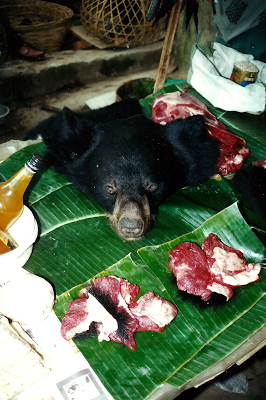
On the market table to my left were deer quartered but with the hair and hides still on. Then I saw what I didn’t necessarily want to see: short-haired, tan dogs split open from their nostrils to their tails, cleaned and ready for sale. But the kiosk getting the most attention was the site of two older women kneeling down behind their sales table working on the entire forearm of a very large black bear. They had just severed it from the rest of the huge body and were now on the ground skinning out the body of the bear with careful precision so as to perfectly preserve the hide, which would be sold separately.

Having spent a considerable bit of time in Asia, I realized what a prized possession the women had brought to market. Bear meat was valuable and, except for being a bit greasy, would remind you of pork. But the value of the bear was really in the bones and organs and such parts as paws, claws, and skull. The Asians respect the medicinal value of spare bear parts, much as they desire the horns of the deer family.

We were at the market by invitation of Dr. Vike Thongu and his dignified and gracious wife, Puii. They had invited me to stay in their lovely home in Kohima while I was in Nagaland, one of the three insurgent states of northeast India. Bangladesh separates Nagaland, Mizoram, and Manipur from the body of India. Nagaland is snuggled up against old Burma and China on the lower slopes of the rugged Himalayas. Nagaland is a place of spectacular beauty and mystique.

At dinner the previous night, an intriguing discussion had precipitated the invitation to the market in order to view the diversity of items offered there. The exotic dinner entrees had included pig and goat (I think) for meat dishes, and lovely presentations of squash, rice, potatoes, and vegetables. But there was one side dish that in the ambiance of lantern light I presumed was ivory-colored pasta mixed with young bamboo sprouts.

“Puii,” I inquired, “please tell me about this delicious pasta dish; I am not identifying the nutritious taste.” Dr. Vike Thongu answered, “You are here in Kohima, Dr. Jackson, at exactly the right time. Only once a year do we have this opportunity, and it is very expensive. We honor you as our guest, for this is the most desired dish of our culture. This is black wasp larva in varying stages of development.” With a closer look, I could see that, indeed, the whole bowl was full of nice, big, plump worms nesting in the tender bamboo sprouts.

For the remainder of that memorable evening I could hear Mark Twain’s injunction ringing in my ears: “Twenty years from now you will be more disappointed by the things you didn’t do than by the ones you did. So throw off the bowlines – sail away from the safe harbor. Catch the trade winds in your sails . . . Explore. Dream. Discover.”

I was not the only person around that table who was exploring, dreaming, and discovering. I found the doctor and his wife to be two of the most dedicated and creative people I had ever met. Mother Teresa used to say, “If you can’t do great things, do little things with great love. If you can’t do them with great love do them with little love. If you can’t do them with little love, do them anyway.” Dr. Vike Thongu and Puii were doing great things . . . with great love!

Dr. Vike Thongu’s hospital was located on a narrow, steep street in the heart of the busy city. Painted across the front of the building were the following signs: “C. T. Scan Service,” “Ultrasound Machine Diagnosis,” “Pharmacy,” and “Endoscope Surgery.” Puii and Dr. Vike Thongu were running the most technically advanced hospital in the whole northeast section of India. Their story of insight, discipline, hard work, and entrepreneurial risk-taking was unparalleled. Dr. Vike Thongu was a gifted surgeon. He performed every kind of surgery from orthopedics to skin grafting to delicate brain surgery. 

The couple had begun with only a dream and a small clinic and pharmacy. They set aside 10% of all their pharmaceutical products for charity and performed at least 10% of all medical procedures for those who could not pay. They saved another 10% and purchased a piece of property for their hospital. They began to build their forty-bed hospital on a cash basis. The discipline and hard work paid off handsomely.

They knew that if they could offer the advanced technical services, they could capture the medical market. They would not take even needed medicine for their own children out of the pharmacy unless they paid the full price. They had no money to buy beds or other furniture for the hospital, so they made their own beds and sewed their own mattresses and sheets. When the hospital opened, they needed divider partitions between the beds. So Puii took the drapes out of their own house and sewed them into usable panels.

Soon they outgrew their hospital, and, with discipline and the money they had saved, they were able to purchase the adjacent property to build another forty- bed facility. In order to help pay for the new facility they began to rent out rooms in their own house.

As an economist and businessman, I was in awe at the entrepreneurial example of the wonderfully dedicated Christian team of Dr. Vike Thongu and Puii. Their eyes sparkled as they unfolded the story to me. As Steve Jobs would say, “The people who are crazy enough to think they can change the world are the ones who do.” They had never acquired an MBA degree from Harvard or Yale, but they were outperforming classic business planners by leaps and bounds and making sure all the time that their charity work was never cut short. They told me that Project C.U.R.E. was the first organization from the outside to ever come and help them. I left with so much admiration and respect for the two of them. Their level of hard work, discipline, frugality, and absolute confidence and obedience certainly must make God smile everyday!

So, throw off the bowlines – sail away from the safe harbor. Catch the trade winds in your sails . . . Explore. Dream. Discover.


MARKET BASKETS

In March of 1999, the U.S. State Department closed our Embassy in Belgrade and withdrew all diplomatic support personnel. Travel restrictions and travel warnings had been issued. Secretary Albright and NATO had made the threat of air strikes, and without the signatures on the proposed accord, bombing by U.S. aircraft began on March 24, 1999, and continued through June 10, 1999. During those seventy-eight days of continual air strikes over the Serbian Republic of Yugoslavia, 25,200 sorties, or missions, had been flown in which 1,100 aircraft took part dropping more than 25,500 tons of explosives on the Serbian territory of Yugoslavia. The total force of the destructive explosives was more than ten times greater than the force of the atomic bomb dropped on Hiroshima. All of that action was without ever having declared war on a sovereign country, or the U.S. Congress giving any approval of the action. It was strictly a decision by the Clinton Administration. 

A huge wave of anti-NATO, and especially anti-American, feeling swept over Yugoslavia and the neighboring countries. It was into that setting that Project C.U.R.E. was requested to go. I had been asked to travel directly into the smoking ruins of Belgrade itself and assess the situation with the idea of supplying medical goods to hospitals and clinics which had, because of the extent of the conflict, depleted their resources.

The U.S. State Department, along with the International War Crimes Tribunal, announced they were placing a five million dollar price tag on the head of Slobodan Milosevic. Serbia restricted its borders to keep out bounty hunters. I was finally able to secure a visa for my passport through Yugoslavia’s Embassy in Canada.

Once I had checked into my room at the Moskva Hotel in downtown Belgrade, I realized there was no air conditioning. When I opened my hotel window I additionally realized I was right in the middle of a huge political protest rally. The protesters were demanding the ouster of President Slobodan Milosevic. They were also registering their extreme disfavor of the U.S. and NATO military actions. I was in the middle of some intense emotions.

From the relative safety of my hotel room, I curiously studied the activities of the individuals gathered in the large intersection below. As a Cultural Economist, I was seeing more going on in the intersection below than just frustrated and angry protesters. I was seeing the clash of economics and culture taking place in its rawest form.

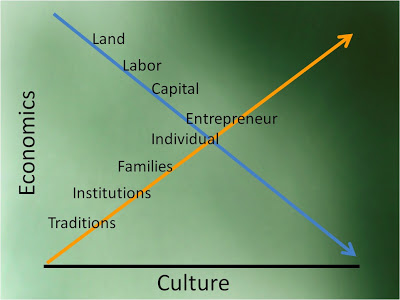
The study of economics has to do with the efficient allocation and organization of resources for production. Cultural economics concerns itself with the relationship of culture to economic outcomes. A given culture will influence political systems, traditions, and religious beliefs, the positions of importance held by the families, the formation of institutions, and the value placed on individuals. Likewise, economic systems have the power to affect and shape the cultures. All of those factors were in play in the intersection below.

My past thirty-five years of international travel have greatly influenced my beliefs and world view. I have had the opportunity of standing in Moscow, Russia, and personally witnessing the collapse of the old Soviet Union. I was in Brazil and Argentina when their unraveled economies were experiencing three thousand percent inflation. I was in Zimbabwe while they experienced the consequences of the foolish mistakes of the Robert Mugabe regime. I have been in Iraq, Afghanistan, Cambodia, and China while they were going through their cultural upheavals. I have come to believe that global transformation, national transformation, corporate transformation, and individual transformation has everything to do with cultural economics. 

Culture, with its components of traditions, institutions, families, and individuals, intersects with classic economic factors like land, labor, capital, and the entrepreneur. It is there that history takes place. It is at that intersection of culture and economics that transformation occurs.

But how does culture influence and dictate economics as it travels through that intersection? How do economic factors influence and dictate culture as they pass through that intersection?

Whether we like it or not, we each have a curbside involvement in that intersection, and I find that exciting and fascinating. Everyone alive has gathered at the curbside of the intersection of culture and economics. 

Each person has been busily shopping at the market place and carries a fine market basket in his or her hand. Inside the market baskets are the most valuable possessions each person owns. The individuals have literally traded their lives for what they have in their baskets.

The personal inventories in the baskets include financial possessions and individual possessions of physical, intellectual, emotional, volitional, and temporal characteristics. Family, friends, and influence are included in the relational possessions. Also included are spiritual and other special possessions that are unique to each individual.

All of the shoppers are gathered there at the curbside of the intersection of culture and economics with their market baskets in hand. They possess the power and opportunity to ultimately determine what happens at the intersection of culture and economics. They hold history in their hands: by injecting the things from their market basket into the traffic flow of the intersection, they determine the direction, timing, and outcome of the flow of traffic.

The greatest and most powerful question that faces each one of us gathered at that intersection, regarding the contents of our market baskets is, “What’cha Gonna Do with What’cha Got?” How we answer that question determines the outcome and recordation of history.

What is it that you have in your market basket today? What do you plan to do with it?

After spending considerable time in examining and reviewing what I have in my market basket, I’ve made up my mind and this is what I plan to do: I want to spend the best of my life for the rest of my life helping other people be better off. I look into my basket and see the potential of a lot of evil in this world. But I also see an overwhelming amount of virtue there to be dispensed. I believe that virtue is extremely powerful in its influence. 

While standing at the intersection of culture and economics, I would like to be among those who believe that by living and dispensing unrestrained amounts of virtue into the equation of culture and economics, we can be extremely effective and positive agents of cultural and economic transformation.

Someone once told me, because things are the way they are, things will not stay the way they are. Or, as C. S. Lewis would say, “It may be hard for an egg to turn into a bird: it would be a jolly sight harder for it to learn to fly while remaining an egg. We are like eggs at present. And you cannot go on indefinitely being just an ordinary, decent egg. We must be hatched or go bad.”

I don’t want to rot or go bad. I do want to hatch and become a dynamic transformation agent bringing help and hope to the people in my world.


SPEND MORE THAN YOU EARN

I am convinced that when dealing with the simple but priceless commodities like kindness, justice, and righteousness, you should spend more than you earn.

In the structure of our present economy people and organizations are allowed to do things they could not otherwise do because of the employment of debt. In our culture many things are too expensive for people to buy out of the cash they have in hand. Debt enables people to make purchases they could not otherwise afford by allowing them to pay off items with small monthly payments that include the price of the item as well as interest. 

Not only individuals, but companies can utilize debt to leverage the return on the equity of their assets. That portion of debt to equity is used to determine the riskiness of the investment, i.e. the more debt per equity the riskier the investment. That is where debt becomes dangerous to both individual and corporate borrowers. Although debt can appear helpful, it can also become a burden and a hazard to your personal well-being. Real trouble comes when the cost of servicing the debt grows beyond the ability to repay what is due. Usually, that inability happens because of insufficient income or poor management of resources, coupled with increased interest rates, late fees, and penalties. 

Historically, excess in debt accumulation has been blamed for many woes of this world and the tragic breakup of many honorable relationships. I grew up following the Great Depression and the stress of World War II. The accepted advice of that era was, “Who goeth a borrowing, goeth a sorrowing,” or, as Ezra Pound would say, “Wars in old times were made to get slaves. The modern implement of imposing slavery is debt.” 

Benjamin Franklin expressed his opinion of debt and advised, “Rather go to bed supperless than rise in debt.” “Do not accustom yourself to consider debt only as an inconvenience; you will find it a calamity,” was the way Samuel Johnson expressed his concern of debt. During that period, most people even saved up enough money under the mattress to pay cash for their automobiles and other major purchases. They believed that home life would cease to be peaceful and beautiful once they needed to depend on borrowing and debt. As kids, we were instructed that we should run from debt as if it were the plague or an addiction. Today, we have grown quite accustomed to words like bankruptcy, foreclosure, short sale, bubble, meltdown, universal default, “too big to fail,” and spending more than you earn.

The above stated description seems to be the attitude and structure of our economy today. I have, however, discovered a wonderful alternative economy when it comes to earning and spending, and spending more than you earn. I have become convinced that when it comes to commodities such as kindness, justice, and righteousness you should spend exponentially more than you earn. With those commodities it should be the rule of thumb that lavish and exorbitant behavior is the investment rule of the day. You can throw all restraint overboard and be totally thriftless. You can never bankrupt your asset account of kindness, justice, and righteousness no matter how much you spend from the account.

Kindness: People universally long for kindness to be shown to them. In all the traveling I have done around the world, I have concluded that people will be exactly as happy and kind toward you as you are toward them. That was true in North Korea, Pakistan, Congo, Iraq, or Afghanistan. Showing benevolence, courtesy, tact, gentleness, patience, and unselfish consideration sends a signal of hospitality that pays great dividends.

Justice: Everybody carries around a psychological-spiritual scorecard. It is very high tech, and is placed somewhere up front, on the inside of one’s forehead. It has an emotionally activated, electric extension cord that runs down to the heart, and it concerns itself with issues of fairness, due process, equity, integrity, fair treatment, reasonableness, and reparation. You can never go wrong dispensing way more truth and justice than you ever dreamed possible. Spending more justice than you could ever earn will always prove to be a blue chip stock investment.

Righteousness: More than likely, your greatest fulfillment in living will be realized through your giving of goodness, virtue, fairness, respectability, honor, and dignity freely into the lives of others around you. Righteousness is a powerful phenomenon that keeps you alive in the hearts of others long after the action on the stage is over and the audience has gone home. That is because the source of righteousness is from a different economy. 

In the structure of our present economy, people and organizations are allowed to do things they would not otherwise do because of such things as the use of debt . . . and there is usually a tragic downside. In this new economy people are allowed to do things they could not otherwise do because you were able to personally transfer into their lives such things as kindness, justice, and righteousness. In our culture we have to employ such things as debt because of the reality of limited resources. But there is no limit to the supply of kindness, justice, and righteousness, because they flow freely from God’s economy and you simply can’t out give God.

Here is the simple challenge: Try it. Freely spend into the lives of those around you the simple riches of kindness, justice, and righteousness. Spend out of your limitless supply. Plant the fertile seeds and watch the astounding harvest as the people around you are able to do things that otherwise they could not have done.


IS IT NECESSARY?

Winston Churchill was such a hero of ours that we named our second son after him. Jay Winston Jackson and I even traveled together to London on Jay’s twenty-first birthday to spend some time at Chartwell, Winston Churchill’s home outside London. At Chartwell we enjoyed the pastoral setting of verdant green rolling hills and the peaceful grazing sheep. Churchill was the first person ever to be made an honorary citizen of the United States.

Of special interest to me, however, were the rooms inside the stately residence where the famous world traveler-Prime Minister-author wrote his many volumes of the history of Britain, India, Africa, and the world. He even wrote biographies and a novel. He had been awarded the Nobel Prize in Literature in 1953. Churchill did not have just one desk where he sat and wrote at Chartwell. Rather, he had built writing desks around the perimeter of the room where he could stand and research and write while moving from one location to another in the room. 

I took several “take-aways” with me as I left Chartwell. Some were quotes I gathered from Winston Churchill’s writings on display. Over the years the words have changed my personal world view. He is the one who said, “It is of no use saying ‘we are doing our best.’ You have got to succeed in doing what is necessary.” 

At first read through, that quote seems about as cute and innocuous as Yogi Berra saying, “I just want to thank everyone who made this day necessary.” But, when studied, you find the innocent looking word package filled with explosive dynamite. 

The poignancy of the statement is developed at the intersection of four interesting issues: Your perception of what is your best, your evaluation determining havingdone your best, your idea of success, and your perception of necessary. Success is only another name for failure if you don’t have your priorities figured out. 

I recall the incident at the basketball game where, in the heat of excitement, the basketball gets loose on the floor. The excited team member shoulders his way into the players, grabs the basketball, and shouts aloud, “I’m goal oriented,” and heads toward the basket. He dribbles expertly, he runs fast, and his footwork and balance are something to behold. The crowd screams and the closer he gets to the basket the more the fans go crazy with excitement. 

Little did the player realize that he was heading toward the wrong goal! But amid all the noise and clamor, the player with the ball hears the voice of his coach. He is not just calmly saying, “Oh, my, he’s going the wrong way.” But, with a thunderous voice and emotion that would spark a coronary meltdown, the coach hollers to the player, “Damn you, Jimmy! You are going the wrong way!” The player hears in time, drops to the floor and mutters, “I’ll be damned.” 

Steven Covey says, “It's incredibly easy to get caught up in an activity trap, in the busy-ness of life, to work harder and harder at climbing the ladder of success only to discover it's leaning against the wrong wall.” And the things that are so necessary should never be held hostage by the things we have, until now, perceived to be important. 

There are three things that might help as we deal with the issue of “doing what is necessary.” 

PASSION: There has to be a lot of dedicated passion involved in order to say, “We are doing our best.” A person who is serious enough to plan and carry out a strategy that would result in her doing her best has already encountered the cost involved in doing her best. That passion dare not be lost but transferred now to the achievement of the necessary

PERCEPTION: How sad it is when we spend our passionate energies to climb the ladder of success only to discover that it was leaning against the wrong wall. How sad to run perfectly to the wrong end of the gymnasium floor and score a magnificent shot in the wrong basket. Our perception of the important, the crucial, the fundamental, the imperative, and the quintessential is worthy of the time it takes to determine against which wall our ladder is leaning

PRIORITIES: It is not a bad thing to go back and reevaluate what you had previously held as priority. Albert Einstein used to say, “What counts can't always be counted; what can be counted doesn't always count.” We need to make certain that the things we ultimately consider as our priorities are really the things that represent our heart’s desires and the goals for which we are willing to give our lives. 

The things that are necessary should become our true heart’s desires, and they should dictate our priorities. Our priorities will then shape our choices, our choices will display our character, and our character will be reflected in our actions. So, the main thing is not just to prioritize the things on our schedule, but to overhaul the schedule of our priorities in order to accomplish what is truly necessary. 

That clear thinking and resolve was what allowed Sir Winston Churchill, in the moments of crucial leadership, to courageously stand before the people of a ravaged Britain and say, 

            “. . . we shall fight in France, we shall fight on the seas and oceans, we shall fight with growing           confidence and growing strength in the air, we shall defend our island, whatever the cost       may be, we shall fight on the beaches, we shall fight on the landing grounds, we shall fight in the fields and in the streets, we shall fight in the hills; we shall never surrender. 
           . . . You ask, what is our aim? I can answer in one word: Victory. Victory at all costs — Victory inspite of all terror — Victory, however long and hard the road may be, for without victory there is no survival.”

Winston Churchill certainly had it figured correctly when he said, “It is of no use saying ‘we are doing our best.’ You have got to succeed in doing what is necessary.”