Insistence on Persistence

“Never give in – never, never, never, never . . .” That was the simple advice given by Sir Winston Churchill in 1941 to the students at Harrow School.

While working together with my son, Dr. Douglas Jackson, at Project C.U.R.E. we have embarked on a familiar conversation at least a hundred times. “We don’t have all the answers to all the problems that confront us. However, we must continue to just keep showing up. We must keep showing up at the ball park every day with our baseball, bat and glove. Sometimes we will get invited to play. Occasionally, we will get up to bat. Maybe, once in a while, we will even hit a home run. But one thing is for certain, we won’t be hitting any home runs, we won’t ever get allowed up to bat, and we will probably never even be invited to play . . . if we don’t keep showing up at the ball park with our baseball, our bat and our glove.”

Early in the colorful history of Project C.U.R.E. an incident took place that shook me to the core. I had worked very hard making appointments with decision makers at hospitals and clinics throughout Denver. I had also gone to manufacturers and wholesalers of medical supplies and pieces of medical equipment. I had told them what I was doing with the new little organization called Project C.U.R.E., and that I wanted them to join me in my efforts to save the lives of thousands of people in developing countries. Many of them believed in me and what I was doing and generously opened their hearts and inventories to me. 

Their generosity, however, forced me to frantically seek additional donated warehouse space in order to store all the medical goods being donated to me. One man in Denver who operated a large medical business invited me to use some of his warehouse space in the back corner of his facility. Everything worked out pretty well and I was grateful for the help.

Then, one morning I discovered that the businessman during the nights had been stealthily slipping over the partition into Project C.U.R.E.’s space and taking for himself some of our collected goods. I then discovered that he had been selling our goods to some of his clients. One sale was in the amount of $5,000. I was shattered! When I confronted the businessman he calmly looked at me and said, “Well, those things were free to you so what are you worrying about? You didn’t lose anything.” I attempted to explain to him that those items had been given to save the lives of needy people who had no other options . . . he wasn’t just stealing some medical goods, he was stealing somebody’s life! That reasoning didn’t make a dent.

My first reactions were, “Why am I going to all this bother to try to collect and distribute these goods to save lives in foreign countries when wealthy charlatans right here in Denver steal the very things that have been donated, and all the while I am not even taking a salary for what I am doing!" Then, I recalled another one of Sir Winston Churchill’s bits of wisdom: “Success is the ability to go from one failure to another with no loss of enthusiasm.”

Instead of getting angry and discouraged and throwing in the towel, I cheerfully arranged to borrow a very large truck, went back to the man’s warehouse and quickly packed up the remaining inventory and moved it into the corner of another donated facility. How sad it would have been if I would have allowed the man’s actions to have discouraged me from returning to the “ball park” where I would be afforded many more opportunities “at bat.”

“Nothing in the world can take the place of persistence. Talent will not. Nothing is more common than unsuccessful men with talent. Genius will not. Unrewarded genius is almost a proverb. Education will not. The world is full of educated derelicts . . .The slogan, ‘press on’ has solved and always will solve the problems of the human race.”
~ Calvin Coolidg

My Goal

There is no secret regarding my goal for the balance of my life: I am determined to spend the best of my life for the rest of my life helping other people be “better off.” I say that with boldness because I have empirically experienced that I have received and am receiving everything I need and desire in my life in direct proportion to my helping other people receive what they need and desire. The minute the formula is reversed and I begin focusing and striving to attain the selfish aspirations that I demand the more I end up losing. 

The more energy and creativity I invest in personal accumulation and attainment the less satisfaction and peace I experience. The more I grab onto the things I want and demand the more they elude me. The more tightly I squeeze the things in my hand that I am determined to keep, whether it is accumulated assets, position or relationships, the more I regrettably squeeze them through my fingers and they escape my grasp. 

However, it seems that the more I relinquish my own selfish pursuits and become aware of the needs and desires of others the more my own life takes on qualities of peace, satisfaction and fulfillment. And the mysterious thing that happens is that I find at the end of the day those things I truly needed and desired in my life have been fully met at the very same time I was focusing on helping others! 

Anna Marie and I spent a lot of time in England, Ireland, Scotland and Wales getting Project C.U.R.E. organized and registered as an official “Registered Charity” in the U.K. Somewhere in our travels I encountered the following true story. It serves to remind me of the importance of consciously trying to help everyone around me be “better off.” 

There was a poor Scottish farmer. One day, while trying to make a living for his family, the man heard a cry for help coming from a nearby peat bog. He dropped his tools and ran to the bog. There, mired to his waist in black muck, was a terrified boy, screaming and struggling to free himself. 

Farmer Fleming saved the lad from what would have been a slow and terrifying death. The next day, a fancy carriage pulled up to the Scotsman's sparse surroundings. An elegantly dressed nobleman stepped out and introduced himself as the father of the boy Fleming had saved. 

"I want to repay you," said the nobleman. "You saved my son's life." 

"No, I can't accept payment for what I did," the Scottish farmer replied waving off the offer. At that moment, the farmer's son came to the door of the family hovel. "Is this your son?" the nobleman asked. 

"Yes," the farmer replied proudly. "At least let me do this,” offered the nobleman. “Let me provide him with the level of education that my own son will enjoy. If the lad is anything like his father, he'll no doubt grow to be a man we both will be proud of.” And that he did. 

Farmer Fleming's son attended the very best schools and in time, graduated from Mary's Hospital Medical School in London. He then went on to become known throughout the world as the noted Sir Alexander Fleming, “the man who discovered Penicillin.” 

Years afterward, the same nobleman's son who was saved from the bog was stricken with pneumonia. What saved his life this time? That’s right . . . Penicillin. 

The name of the nobleman was . . . Lord Randolph Churchill and his son's name was . . . Sir Winston Churchill. 

You will always have everything you need in life if you will help enough other people achieve what they need to be better off.


Needs

People give to you because you meet needs . . . not because you have needs. 
 

I have been involved in humanitarian and philanthropic endeavors in some way most of my life . . . so have you. We are satisfied that the “cause” is a good cause or we would not be involved. The problem boils down to not having enough money in our own blue jeans to cover the financial requirements to accomplish the project. That necessitates the expansion of our revenue base and the solicitation of funds and resources from other people. How shall we do that? 

Usually, the plan of action statement includes phrases like, “Well, bless your heart, we’re just going to tell it and show it like it is and the people will catch on and respond by giving generously. ” Then there comes the hitch. What method shall we use to motivate the prospective giver to join in? There are a few favorite default motivators. You can give guilt, because guilt is the gift that just keeps on giving. Using pictures that are borderline horrific, or at least disgusting, seems to be another favorite method to motivate. The shock and awe may move the hand to the checkbook or credit card. 

Anna Marie and I were in Minsk, Belarus, following the collapse of the old Soviet Union. It was about seven o’clock on a Monday evening when we arrived at the Minsk Hospital #1 to perform a “Needs Assessment” of the facility. We were there to determine the appropriate medical supplies and pieces of medical equipment to be donated to the hospital by PROJECT C.U.R.E. Dr. Anna Novechenko was the Chief Physician of the Pediatrics Division of Hospital #1. She was a very dignified and competent lady and compassionate about the children and her work. She had been head of the Pediatrics Division during the unraveling of the Soviet economy and the collapse of their medical system. 

As we walked down the old stairway and out into the parking lot of Hospital #1, Dr. Anna walked with us, holding onto my arm. “Please don’t just walk away and leave me,” she begged. “As you can see, we are doing everything we possibly can to save these children.” Then she stopped us and pointed back to the darkened windows of the Pediatrics Wards. “There are many children up there who desperately need surgeries. But I can’t cut them open because I don’t even have any suture to sew them shut.” Dr. Anna went on, “there are many groups from the USA who come here and take graphic pictures of our terrible plight. And they go back to USA and mail out our pictures and collect a lot of money, but they never come back and we have never received any help from any of them!” 

After many years of observing life and maintaining a mental score card, I have come to this conclusion: If you are involved in philanthropic work in your community, your church or a special humanitarian cause, and you need other people to come along side of you and help support you with donated time, funds or other resources, forget about the dramatic shock and awe motivators. If, indeed you are meeting legitimate needs, be simple and forthright in sharing with your friends what you are doing to solve the immediate problem with help and hope. Don’t underestimate the discernment and integrity of your potential donors. People will give to you because you meet needs . . . not because you have needs.


Wealth Is Not Stuff

As a culture, we have opted to believe that the “wealth” of an individual can be measured by how much stuff he or she has accumulated and can put on display. Accumulation of icon items surely proves beyond a doubt that we have prevailed in the race to riches and are obnoxiously successful . . . doesn’t it? If we possess stuff we are considered wealthy, therefore we are to be considered a valuable person in society. 

As an economist, I want to soothe your soul and give some consolation. That prevailing presumption always has been and always will be this world’s belief. Little consideration has been given throughout history to the simple fact that the idea is an unfounded lie. Portugal and Spain raced into the New World in the 16th century and stole enormous amounts of gold and took it back home. About the only thing they accomplished was to force the prices in their respective countries up by 200 percent while believing the false notion that having more money in their society would make them wealthy. 

In 1917, the Bolsheviks in Russia believed that if they could just get their hands on the “golden egg” held by the Czars they could divvy up the riches amongst themselves and live happily ever after. When they ran out of the Czars’ assets they had to expand into Central Asia and rape and pillage the people there. They had bought into an untrue myth. It doesn’t really make any difference how big a pile of stuff you accumulate or how much diversity is included in the pile; wealth is not stuff. You consume stuff. It deteriorates, depreciates and ultimately disappears. And everyone else, especially the government, wants to take it away from you because they, too, believe the pile is wealth. 

So, what is wealth? Wealth is production. Wealth is the opportunity to participate in enterprise. Wealth is the phenomenon that converts resources into sustainable enterprise and additional production. Cultures that allow and encourage enterprise are wealthy. Cultures that do not allow and encourage enterprise are poor! The result of successful enterprise and production is stuff . . . not the other way around. Cultures that do not understand the difference, and greedily go after the pile of stuff and the golden egg at the expense of killing enterprise and production, end up in revolution or bankruptcy. 

History is disgustingly full of examples of consequences where cultures mistakenly went after the acquisition of the golden egg at the expense of enterprise and production. I watched with my own eyes the tragedy of Rhodesia/Zimbabwe unfold as I traveled there over a 30- year period. One of my first economic consulting assignments was to Robert Mugabe’s new “Zimbabwe.” Under enterprise and production, Rhodesia had become the “bread basket” of Africa. Beautiful, well- run farms with concrete irrigation ditches, modern equipment and technology produced abundant crops, not only to feed all the countrymen, but also tons left over for export.

It was simply too fine an egg to go unstolen. The tragic misunderstanding was that if there were some way you could grab the pile of stuff, the wealth would be miraculously transferred to the politicians in charge of the transfer. Not so. There was total disregard for the economics of enterprise and production. In subsequent years, I returned to Zimbabwe. My heart would ache while driving the roads outside Harare, Chitungwiza and Bulawayo. The houses had been stripped of valuable items. In the fields were broken pieces of farm equipment, and the silos stood empty of crops. Farm prices were manipulated by government, and people were going hungry. 


A decree went out to the last of the “hold-out farmers” that they were to surrender their farms to “the people of Zimbabwe” and leave the country by the 8th of August- 2002. I arrived in Harare on Wednesday, August 7. I could not have visited Zimbabwe at a more potentially explosive time. One of my acquaintances from a previous trip had refused to leave his farm. An ambush had been set for him. He was tied to a tree and beaten and shot 14 times. They had left the dead farmer in the road where his dog faithfully laid by his side for three days until some of the other farmers found him.

Another farmer, whom I had met at a church in Harare on an earlier trip, was visited in person by a high-ranking official in the government. He had been told, “I know you love this farm. It has been in your family for three generations, so let’s solve this problem in the easiest way: (1) you deed all your farm and livestock and equipment to me personally and I will keep it out of the hands of the hostile masses; (2) then you stay on and run the farm, as you now are, for me, and you will not get hurt. That’s a wonderful solution for everyone.” 

On August 9 the media reported that there were approximately 2000 farmers still on their farms. By midnight another 600 had left. Because greed had trumped sane economics, the robbers presumed that the farms would simply run themselves and the pile of stuff would always be there. In their rush to grab the golden egg they had sadly stepped on the neck of the goose that had been laying the golden eggs. They only saw the golden eggs and wanted the pile of stuff for themselves. But the stuff vanished. They had killed the phenomenon of enterprise, and as production stopped wealth disappeared. The food to feed Zimbabwe had come off those farms, and the people who were once employed by enterprise were jobless. There’s a very high price to pay when greed of a culture violates basic economic principles. But there is one economic principle about which we need not get confused: “Wealth is not Stuff!”


Coffins

I’m in the business of Global Transformation. I don’t necessarily like the negative connotation that goes along with the label of “non-profit” if that includes getting by with doing things in a secondary manner or living with second-class results. There is a whole world of the social sector conscience presently marching under the banner of “goodness.” These agents of change are creative, tenacious individuals with unshakable motivation, and they are desperately needed to propel the innovation necessary for our civilization to tackle our most serious ills. 

It has become quite obvious that the needs are not going to be met by the paralytic hands of world governments. And, sad to say, many religious denominations and organizations have become as stymied by institutionalization and lockstep tradition as the most inadequate government. But the people who are becoming involved in this push for global transformation are setting aside visions of personal financial accumulation and the narcissistic lifestyles in order to experience the excitement of genuine worth-building adventures. 

If there is a perfect antithesis to the terrorist’s impulse it is this swelling surge of the new global transformers bent on making this needy world better off through the power of goodness. They demonstrate the power of building things up and making things better off instead of blowing them apart! And they are addressing many of the underlying causes of today’s global instability like: sickness, causes of poverty, and lack of education. 

I take courage and personal confidence in the fact that throughout history when the powers of evil and ignorance seem to be gaining an upper hand there are those dedicated and compassionate people who step forward and receive their marching orders to become agents of global transformation and never blink an eye at the cost that will be exacted from them. 

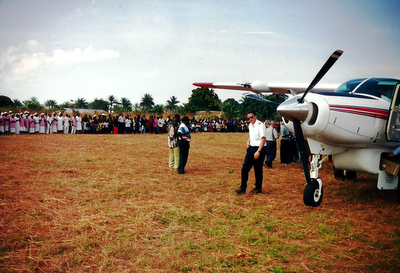
While traveling through the war-torn countries of Congo and Angola I was reminded of the price that had been paid by global transformers of past generations. Our Cessna 208 circled over the huts along the Songolo River. As we landed on the grassy runway of Kajiji, the villagers ran out to greet us. The entire school of nurses showed up in their pink and white uniforms and starched white caps. As we unloaded the medical supplies from Project C.U.R.E., the native chorus began singing. 

I was led to the hospital compound and a stately old stone house with a picturesque veranda that overlooked the river and south toward the hazy distant valley. While being served a lunch of bananas, rice, goat meat and bread made from manioc plant, my hosts related to me how in the early 1900s the people of the whole central African area were dying by the thousands. Then some people from England and America started coming, promising to help them get better. They were global transformers with incredible love and compassion. They were called Presbyterians and they accepted applications from people to go to the Kajiji area to see if they could discover the reason for the pandemic. The average stay of the young Brits and Americans was 11 months! They came to Africa, trying to discover as much as they could. They journalized carefully what they had discovered, sent the information back home, then succumbed to the illnesses themselves. Another wave of brave global transformers would come to take their places. Part of the agreement in order to go to Kajiji was to pack all their belongings in a wooden coffin when they traveled to Africa so that there would be a convenient way to ship their bodies back home for burial. 

I probably won’t be required to pay such a price for my involvement as a cultural transformer, but I am proud to be included in the growing, compassionate army of wonderful and brave people who stand undaunted by risk or resistance when it comes to helping needy people all over this world become better off. 

Collaboration

Be a champion by fostering a personal, corporate and international culture of collaboration. 

As a lover of words, I am vexed when our culture experiences the defacing of a really good word. But I rejoice when that word triumphs and morphs back to its grandeur and greatness. When I grew up during World War II, the word “collaboration” had a certain shadowy grunge to it because it referred to a traitorous cooperation with the Nazi enemy in the 1940s. And now, collaboration has rightfully regained its dignity as an effective “buzz-word” in the world of business policies and relationships. 

Collaboration is a recursive experience where two or more individuals or groups are determined to work closely together sharing knowledge and efforts in order to achieve a common objective. In a certain sense, all trade and commerce must include collaboration between parties for a deal to go together, even the simplest of barter transactions. But our world is becoming increasingly aware that with specialization, refined divisions of labor and readily available technology different parties can end up with comparative advantages in their special fields. That comparative advantage can be shared and leveraged into significant dividends through collaboration. 

A couple of the business world’s most effective authorities on “Connection and Collaboration” reside right here in Denver, Colorado. Jan Mazotti, Editor-in-Chief of ICOSA Magazine, and Founder and Publisher Gayle Dendinger are fostering change around the world by encouraging and facilitating cooperation and partnerships among individuals, corporate entities, governments, charities and educational institutions. They are running a marvelous enterprise! 

ICOSA not only promotes collaboration but also becomes actively involved in the process. Project C.U.R.E. has partnered with ICOSA locally and around the world. Gayle Dendinger and his principle business, CAP Logistics, are great encouragers and donors to Project C.U.R.E. In 2005, CAP Logistics and Project C.U.R.E. even shared Denver’s prestigious “Ethics in Business Award” founded by Daniels College of Business at the University of DenverColoradoBiz Magazine and the Samaritan Institute

One memorable occasion where Project C.U.R.E., CAP Logistics, and ICOSA collaborated was on a project in Afghanistan. Project C.U.R.E. was able to bring donated medical goods and expertise to the table but lacked the transportation detail. ICOSA and other organizations joined the effort and together we accomplished the desired goals where otherwise none of us would have been successful. The Mississippi Air National Guard flew one of their C-17 cargo planes to the Bagram Air Force Base in Kabul, Afghanistan loaded with all the goods. From there the donations were distributed to 14 Afghan cities in order to replenish 29 health care centers with medical goods. The lives of two Afghan children were saved with the medical goods within just hours of the plane being unloaded. That’s the power of collaboration! 

People reach higher levels of performance by working together, and those leveraged relationships result in a synergy that reaches far beyond your own walls and capabilities. So, why keep trying to run your race all by yourself when you can join some equally passionate folks and together become champions of excellence through collaboration? 


Are You Mr. Browning?

Experiences touched by divine providence reveal the intimacy of God. 

Does God really care about the minute details of your life? Is he really in control of everything, some things or nothing? 
 

For many years I traveled in the worst and most dangerous places on the face of this earth for as many as 250 days of each of those years. Anna Marie would drop me off at the Denver International Airport, and we were aware that it was very possible that with that kiss goodbye we would never see each other again. Some of the times I was most vulnerable were when I traveled alone into a third world country for the first time, depending on someone I never knew to be there to pick me up at the foreign airport. 

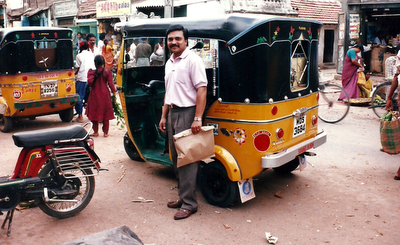
From Singapore I boarded Malaysia Airlines to Kuala Lumpur. From Kuala Lumpur I changed planes to Madras, India. It had been agreed that I would be met in Madras, a metropolis of about 10 million people, by a "Mr. Browning.” I had been advised that arriving in Madras in the middle of the night would be extremely dangerous. He would be carrying a placard displaying my name and would be standing just outside the customs exit. 

I was traveling with only two carry-on bags, so I went directly to immigration control, bypassing “luggage pick up.” I was one of the first to leave the secured area and was dumped into the crowded mass of Indian people waiting for the arriving passengers. It was well past midnight. The suffocating crowd included many beggars and lepers. My eyes raced across the crowd searching desperately for Mr. Browning and a placard bearing my name . . . no one. I was trying to be careful not to step on the lepers sleeping on the concrete walkways. As I got closer to the outer edge of the crowd, a small band of desperate-looking Indian teens in ragged clothes began to surround me covetously eying my two carry-on bags. 

I had an instant flashback. My mind took me back to a safari in Kenya. Our guide was explaining to us how the cheetahs and female lions watched the eyes and behavior patterns of the gazelles or water bucks. The ones they picked out to ultimately attack were those perceived to have a flaw, or a weakness or lack of confidence. I thought to myself, "No way! If out of desperation you are looking for panic or lack of direction in someone's eyes you will have to find it in another victim's eyes." I confidently walked straight for an abandoned luggage cart and placed my two bags on the cart as if it had been planned for a year. I turned the baggage cart back toward the terminal and the crowd. There was another entrance to the terminal but it was blocked by Indian police. I pushed my way through the crowd and back into the security of the building. I searched the line again . . . no one! 

The only thing predictable about desperate people is that they are unpredictable. I decided to stay in the building. "Where in the world was Browning?” I spotted an older Anglo-looking couple. I pushed my cart through the crowd right up behind the couple. I reached over a row of short Indians and laid my hand on the old man's shoulder. “Are you Mr. Browning?” I asked. 

"No, I'm Mr. Selz, from Utah, U.S.A." “Well,” I answered. “I am Jim Jackson from Colorado; we are neighbors. I explained my situation to my new friend. “It doesn’t look like my party is here to meet me. This is my first time in this part of southern India. If no one shows up, where would you suggest I stay for the night?” Mr. Selz stroked his stubble-whiskered chin. “Be careful, but I think it would be good if you went to the Trident Hotel . . . that’s what comes to my mind.” With that exchange, the Utah couple found their arriving passengers and disappeared with them into the night. 

I was trying to find a taxi driver who would accept my fare in US money, when I spotted a bus coming across the parking lot. “Trident Hotel” was written on the side. I ran over and stood in front of the bus until it stopped. “My name is Jackson, and I need a ride to the Trident Hotel.” As the driver was putting my bags into the bus, a young Indian fellow called him over to the side, and my ears flapped when I heard the name "Jackson." I knew that I was being set up. The young man came onto the bus where I was sitting, stuck out his hand and asked, "Jackson?" 

I replied, "Are you Mr. Browning?" “No, but earlier this afternoon I made reservation for you at the Trident Hotel. Then he went on to tell me, "I knew if I waited for you to get on the Trident bus I would be able to meet you.” 

“But,” I protested, “I didn’t know The Trident Hotel even existed until a few minutes ago when a stranger from Utah, US innocently suggested I might like the Trident Hotel. He could have suggested the Hilton Hotel. And what gave you the idea that you could wait out in the parking lot and watch me get on the bus when you had no clue as to who I was or that I would ever run out, stop that bus and get on? None of that is connected.” He kindly smiled at me, sat down and rode to the Trident Hotel with me. We both got off together and he walked me to the front desk and disappeared. It was after 2:00 a.m. when I settled into my room. On a small table next to the bed was an ornate basket of fresh fruit and biscuits. Even at that late hour, I ordered a fresh pot of hot tea and went over and over the details of the night in my mind. None of the events made logical sense. I fell asleep that night thinking, “I don’t pretend to know just how all these things work, but I am eternally grateful that God knows who I am and enjoys taking care of me.” Experiences touched by divine providence reveal the intimacy of God.


Parker Bros, Poker and the Myth

Parker Brothers made millions of dollars marketing the table game Monopoly. It takes two to three hours to play a round of the game. Its history can be traced back to 1904 where it was developed as a teaching tool to explain the single tax theory.

Poker is a game where betting begins with some form of forced bet by one of the players. Each player is betting that the hand he has will be the highest ranked. Each of the other players must either match the maximum previous bet or fold.

Both games include one striking similarity . . . one player ends up with “more” only as another player ends up with “less.” They are “zero sum games.” The only way one can gain is at the expense of someone else. It is like an apple pie, if one person eats more another person gets less. Over the years many well-intentioned folks have swallowed this analogy as an axiomatic factor of life. If you have something it is because someone else does not. You took it away from someone else or you wouldn’t have more. It becomes very easy to deduce that the reason we have an abundance of poor people in the world is because we have a few other people who have grabbed a huge portion of the pie and left everyone else without. Before careful examination of the issue, I used to swallow that reasoning hook, line and sinker.

One day I was doing some research for a paper I was writing. The material I was reading raised the fact that the “three richest men in the world” control more wealth than all 600 million people living in the world’s poorest countries. I was tempted to embrace the obvious point, that the reason there are 600 million people in the poorest countries was because the three men had snagged all the money before it got to the 600 million. At that point I had to ask myself the realistic question, “How much additional money would those 600 million persons have in their pockets today had Bill Gates and his two other buddies not earned all that money?” I was forced to answer, “Probably not one additional penny,” because wealth is a different myth. It is not a clump of something . . . it is not a zero sum game. The gains of the winners are not simply products of theft. People can grow wealth if they are allowed to do so. People can create successful enterprise and thus create wealth and can enrich all who are associated with the undertaking. Production is the wealth. At the end of my research I was faced with a different question, “Just why have the 600 million people in the poorest countries not been able to produce more than they have?”

I have walked this world’s slums and have become acquainted with the locations of abject poverty. I wasn’t on a luxury tour bus . . . poverty was the location of my work for 25 years. I have been driven by the belief that something positive can be done to reverse poverty. Strong economies cannot be built on sick people. So, for over 25 years Project C.U.R.E. has been dedicated to taking health and hope to over 125 developing countries of the world.

A most delightful and encouraging phenomenon crossed my pathway while trying to deal with ingrained poverty. The United Nations declared 2005 the International Year of Microcredit. And in 2006 The Nobel Peace Prize went to Muhammad Yunus for his work providing microcredit to the poor.

The idea germinated in Bangladesh in 1976 with the Garmeen Bank delivering small loans at low interest rates to rural poor. The program became a popular tool for economic development throughout the third world and sparked a revolution in micro-entrepreneurship. The newly created enterprises generated employment and the efforts began to create and grow real wealth. Today 75 percent of all microcredit recipients worldwide are women who are now given a chance to establish a sustainable means of income. Growing the enterprises increases disposable income. That leads to more economic growth and development.

The new business owners of the micro enterprises don’t have more because someone else in the village has less. Others in the village, in fact, also end up with more. Everyone starts to become “better off.” What a glorious experience it is to see the power of debilitating poverty being reversed, and people who have been held down by governments and tradition being given an opportunity to become part of the solution rather than the problem.

Using “zero sum thinking” is acceptable at the Parker Brother’s Monopoly board or the challenging Poker table, but please, don’t succumb to the temptation of applying zero sum thinking to the economics of real life.


How Much is Enough?

I was born 9 months before the surprise attack on Pearl Harbor that plunged the US into World War II. The development of the war-time industries needed to aggressively defend our nation actually served to pull the US economy out of the devastating depression of the 1930s. My earliest memories and experiences were shaped by the war-time culture and the attitudes of austerity and frugality. There were always shortages. There was never enough. It was much like the reaction of Scarlet O’Hara after the Civil War as she returned to Tara and declared that she would never be without things and money again . . . ever! 

When the war was over we entered some pretty heady times. The economy had rebounded. Industry and commerce were humming, and the girls and moms who had entered the work force while the men were away fighting simply stayed on at their jobs. Many of the returning military men headed to school to take advantage of the G. I. Bill of Rights and free tuition. I heard it repeated over and over by the grownups, “I will see to it that my kids have it better than we did.” 

It shouldn’t be too surprising, I suppose, that the recent generations have never really concerned themselves with the concept of “How much is enough?” That’s not been the issue. The real issue seems to be “How much can I accumulate?” The kids, grandkids and great grandkids, indeed, have ended up with “more.” But I have yet to be convinced that they ended up “better off.” Our culture has tried to arbitrarily establish some guidelines for enough. When the child is eight years old he or she has had enough of the third grade and will move on with the peers whether the subject matter has been mastered or not . . . an eight year old has had enough of third grade. We set tax laws that say that when you work hard and earn a certain amount deemed “enough,” you will be punished and it will be taken away from you. When you eat too much your stomach can give you an acute warning of enough. But in a heartbeat the taste buds can trump the message and you can madly race on into obesity. 

Until I was nearly 30 years old I had never seriously considered, “How much is enough?” My sufficiency was more than adequate. My thoughts during those early years of austerity were that I would be a millionaire someday. By the time I was 30, I was sixteen times over that. It was then I realized that I was addicted to the game of accumulation. My idea of “how much was enough” was simple . . . enough was one dollar more and one more deal completed. It was then that Anna Marie and I decided that we needed to break that addiction, “cold turkey.” We gave away our accumulation of wealth and started over again. We did not take a vow of poverty or pledge to wear a hair shirt. We simply needed to break the addiction to the mindset of accumulation and realistically deal with the question of “How much is enough?” 

I have tried to become an attentive observer while traveling in the 150 countries I have visited over the past twenty-five years. I am intrigued by cultures where the people have historically dealt with the question of “enough.” And some of the sweetest words in the entire world are those words of personal responsibility that I am hearing from the lips of my own friends and the members of my own culture . . .“Yes . . . that’s enough!”


Cost vs. Value

Economic concepts and economic systems matter. We are individually “better off” when we slow down and begin to recognize the subtle signals of the economic structure and learn what they are telling us. A signal from the “pricing system” reveals to us dependable information that will help us make better decisions. Signals tell the producers what the consumer thinks something is worth. Signals tell me where to go to get the best deal. There is always a healthy friction of discontent between the producer who thinks he is receiving too little for the gallon of milk he produced, and the mom who “just knows” the price is too high. That’s good.

While traveling around the world, I am intrigued as I observe various economic signals. I have seen with my own eyes that if you raise the cost of doing something the people will do less of it. There is no behavior that is not affected by cost.Higher income, for example, becomes one of the greatest controllers of the birth rate. When the people become richer they have fewer babies (one of the cardinal factors of the recent occurrence of genocide in Rwanda . . . the Hutus were out birthing the wealthier Tutsis nine to one). 


But there is another set of signals that I have been trying to process lately. There seems to be a direct and positive correlation between “cost” and “value.” Something that comes without cost to you will more than likely be regarded as of little or no value to you. You assign a higher value to something if it has cost you something. There have been studies showing that a college student who has earned the money for his or her tuition will do better than the student who is on a free ride. A bike that is “earned” is treated better than a “freebie.” 

I had an interesting thing happen to me in the early days of Project C.U.R.E. People who were preparing to travel to a foreign country and desired to take some donated medical goods with them to present to a foreign hospital or clinic, or medical groups needing clinical supplies for their mission, would come to our warehouse and ask us to furnish them with the goods. We began to assemble boxes of about $1,500 worth of donated medical goods and just let them walk out the door with our blessing. Later, however, I discovered that should those well-intentioned people run into difficulties getting those boxes on the airplane as luggage, or should they encounter aggressive border or customs people upon entrance into the country, they would simply turn their backs and walk away from the donated goods saying, “Oh, well, they were free to us and when we need more we can go back to Dr. Jackson and Project C.U.R.E. will always give us more." 

When I learned of what was happening I started charging a fee of $100 for the $1,500 worth of donated goods. That simple personal investment changed everything. From that date forward we never lost a box. And now, even when we donate a huge ocean going cargo container of medical goods valued at close to one-half million dollars, we require the recipient country or sponsoring group to pay the cost of shipping and handling of the container as their “buy-in” requirement. That guarantees that the recipients will be at the customs building in order to protect their investment and see to it that the container is received by the hospital or clinic. 

In my mental processing of this positive correlation between “cost” and “value,” I have come to this conclusion: as a rule of thumb, you can determine the true value to you of something by deciding how much of your personal life you would be willing to exchange for that object or service - because there is no behavior that is not affected by cost.