Status Symbols

On the border of Ukraine and Romania, near the town of Gura Humorului, surrounded by orchards of peach, cherry, apple, and pear trees, is a large community of artistic “tinners.” While visiting the area, I discovered that the Ukrainian, Russian, and Romanian metal workers of that area historically possessed unique abilities to design and build ornate roofs of crafted sheet metal. Their homes, barns, gazebos, and even outhouses displayed roofs of stunning architecture and art form. The beautiful buildings were definitely influenced by the architecture of the old Orthodox churches, and each building delivered a pronounced message of the owner’s belief and support of the old Orthodox Christian institutions. They were eminent statements of status. 

Several months later, I was traveling through the West African country of Cameroon. About 5:30 Saturday morning, I was able to negotiate for a small loaf of French bread, butter, and a cup of hot tea. My driver, Vincent, had been up early and had the Toyota SUV washed and filled with diesel for our eight-hour trip from the seaport city of Douala, north to the Mbingo hospital close to the border of Nigeria. 

We took the seaport route out of Douala, a bustling city of two and a half million people, and successfully dodged pot holes and unpredictable Saturday morning market traffic. We made our way through sleepy African towns of Limbe, N’Kongsamba, and Kunba. As we approached the city of Bafoussam, I noticed certain houses that had high-pitched metal roofs made of shiny sheet metal, usually with a design similar to a weather vane on top. Some compounds had several of the peaked roofs, and others had, maybe, only one or two, and some had no peaked metal roofs at all.

I was aware of the Muslim influence in that part of West Africa, and asked Vincent if the steep square roofs of metal had anything to do with Muslim culture? 

“No,” replied Vincent, “in this western region of Cameroon the culture only allows you to place one of those steep metal roofs on your buildings if you have reached a certain level of wealth. They are symbolic of castles or royalty. You must pass the wealth test, and then the other wealthy people of the area give you permission to build a steep roof. The more wealth you have the more steep roofs you are allowed to build. That is why some compounds have six or eight roofs and others only have one, and some have none. It is necessary for the real rich to constantly keep building outbuildings just to display more roofs as a status symbol of wealth. 

As we entered Bafoussam, I asked Vincent what he meant by wealth. “How wealthy are the people of Bafoussam in comparative value?” 

“The people of Bafoussam are everywhere in Cameroon, but their real homes are in this western region of the country.” He went on, “about all the buildings in Douala, and the capital city of Younde, are owned by the people of Bafoussam. Nearly all the construction companies are owned by them. They pretty much control the wealth of the country, and these peaked roofs send out that message.” 

A status symbol is a visible, external message of one's perceived social or economic position. 

What people employ as status symbols will differ between countries and cultures based on what is considered valuable to them. It is not unusual that status symbols even change over time. Anna Marie and I love to visit the historic homes and castles throughout the world. Before the invention of the printing press, owning a large collection of books was considered an impressive status symbol. With time, books became a less-recognized or rarefied status symbol. 

Possessions typically perceived as status symbols in our culture may include a large house or penthouse apartment, a second home or ski chalet, haute couture fashionable clothes, some number of luxury vehicles, a trophy wife, a sizable collection of high-priced artworks or antiques, a privately owned aircraft or a luxury boat that is moveable from one status location to another. Even a securely tenured position at a prestigious university or research institute can be flaunted as a mark of high status. 

Ancient Central American Mayan cultures artificially induced crosseyedness and flattened the foreheads of high-born infants as a permanent, lifetime sign of noble status. In the Middle East, and especially in the northern tier of African countries, the women use the application of henna on their bodies as status artwork. They like it because it does not wash off, but eventually disappears so that they can start over with new designs. However, they are some of the first persons to come to our free health clinics complaining of permanent liver problems. The blood that carries the henna designs away from the skin deposits the dye in the liver. That can be fatal. 

The employment of status symbols can be a very tricky activity, indeed. Many times an individual is capable of buying the status symbol solely to impress others, but does not possess the personal wealth that is implied by the symbol. Charles Spurgeon, the theologian of another era, warned the people of his day, “No one is so miserable as the poor person who maintains the appearance of wealth.” Robert Frank penned an article in the Wall Street Journal regarding our recent financial crisis: “If the financial crisis has a silver lining, it is the decline and fall of the overpriced, over-hyped status economy. You know, the one built on bling and Hummers and Louis Vuitton for the masses. The past decade may have had its excesses, but none was as stupefying as the $300,000 watch that doesn’t tell time.” 

Usually, status symbols will give insight into the value system of a culture or subculture. The symbols represent what most people in the culture or society can’t afford to own or indulge in … but wished they could. And, it is but of my own folksy observations, that status symbols wouldn’t even be effective were it not for our human capacities of envy, lust, and discontent. I rather like the advice of ancient Socrates: “If a rich man is proud of his wealth, he should not be praised until it is known how he employs it.” 

“Possessions, outward success, publicity, luxury - to me these have always been contemptible. I believe that a simple and unassuming manner of life is best for everyone, best for both the body and the mind.” That quote was Albert Einstein’s view of wealth and symbols of status. I would say that’s some pretty intelligent advice from a pretty intelligent fellow.


Reconciliation

Nothing has traumatized my psyche and emotions over the past nearly forty years of international travel, like the real-time observations of genocide. I have seen with my own eyes the atrocities in the Bosnia-Kosovo-Herzegovina tragedy. I experienced the killing fields of Uganda, Burundi and two episodes in Congo. I was in Nagorno Karabakh and experienced the systematic killing of 80% of its male population with almost no media coverage at all. I stood where the Turks ravaged the population of the Armenians. I have visited Cambodia and diligently observed and studied how Pol Pot and the Khmer Rouge diabolically murdered everyone who did not fit their envisioned model of agrarian communism. I have visited the Jewish holocaust museums in both America and Israel, and have concluded that evil is very real, cultures are very fragile, and genocide can happen anywhere.

Witnessing the occurrence of genocide being perpetrated by the Hutus upon the Tutsis in Rwanda still plays horror movies on the wide screen of my mind. After the genocide stopped, we drove in a Volkswagen van from Kampala, Uganda, to the heart of Kigali, Rwanda. There I encountered the scenes I cannot now erase. 

Out of a population of 7.3 million people—84% of whom were Hutu, 15% Tutsi and 1% Twa—the official figures published by the Rwandan government estimated the number of victims of the genocide to be 1,174,000 slaughtered in 100 days, between April 6 and mid-July. That figures out to be 10,000 Tutsis or moderate Hutus murdered every day by their own neighbors; 400 every hour, 7 every minute. It is estimated that about 300,000 Tutsi, who had escaped to neighboring countries, survived the genocide. Thousands of widows, many of whom were subjected to a planned strategy of rape and female mutilation, became HIV-Aids infected. There were about 400,000 kids left as orphans, and nearly 85,000 of them were forced to become heads of families. The killings, on the most part, were accomplished without the use of any guns, but by hand with the use of machetes that were issued to the Hutus by their leaders, or the victims were bludgeoned to death with common gardening hoes and shovels.

It is important to see, from a cultural economics standpoint, that genocide differs from war. War, historically, is fought for tribute to be paid by the vanquished to the victor. Or wars are fought over the possession of some disputed border-land geography. But genocide takes place where there is full intention of destroying and replacing a culture. In 1994, the Hutus in Rwanda wanted to completely destroy and remove all remnants of the Tutsi culture and civilization. Their intentions were to kill every man, woman, boy, and girl who was of Tutsi blood, and every trace of Tutsi traditions, institutions, family structure and legacy, as well as all living individuals.

Once genocide has been accomplished, the aggressors assume undisputed right and sway over land (resources), labor (production), capital (business, currency, trade), education, religion, policy-making and enforcing, and the entrepreneurs are replaced by either a dictator or by a politburo.

Very little thought is given at the time of the genocide to the slaughter of the innocent civilians or any other hideous atrocities perpetrated. It is deemed imperative that the culture needs to be eradicated, and the eliminating of people is viewed as an incidental requirement. Therefore, it is impossible to enforce any standard rules or treaties of war.

The Commander and General of the Rwandan Patriotic Front, a Tutsi named Paul Kagame, brought a halt to the killings and gained control of the country by mid-July, 1994. By then, the facts had begun to percolate out from Kigali. The United Nations had failed miserably in fulfilling its peacekeeping assignments. The Clinton Administration and the UN actually eroded support and blocked any help from going into Rwanda to stop the aggression and genocide by the Hutus. Later, President Clinton in a Frontline television interview admitted that he regretted the decision, and later publicly stated that he believed that if he had sent 5,000 U.S. peacekeepers, more than 500,000 lives could have been saved. President Clinton has referred to the failure of the U.S. government to intervene in the genocide as one of his main foreign policy failings.

In 2000, the UN explicitly declared its reaction to Rwanda a "failure." Then Secretary General Kofi Annan said of the event, "The international community failed Rwanda, and that must leave us always with a sense of bitter regret."

So, following the occurrence of genocide, how does civilization reset its clock?

John Rucyahana, the Bishop of Rwanda, admitted, “I knew that to really minister to Rwanda's needs meant working toward reconciliation in the prisons, in the churches, and in the cities and villages throughout the country. It meant feeding the hungry, sheltering the homeless, caring for the young; but it also meant healing the wounded and forgiving the unforgivable.”

In July, 1994, Tutsi leader, General Paul Kagame, was chosen vice-president of a new unity government, and Hutu leader, Pasteur Bizimungu was chosen president so that the majority Hutus would still be highly represented in the government. Bizimungu resigned in March of 2000 in a dispute over the make-up of a new cabinet, and Kagame became president. Kagame subsequently won elections in 2003 and 2010.

During the genocide, most of the governmental institutions were destroyed, including the judicial courts. Most of the judges and prosecutors had been killed. Out of 750 judges, only fifty were left alive in the country. However, there were over 130,000 suspects who had been arrested and were being held in jails for crimes related to the genocide atrocities. Between 1996 and 2000, the courts could only process 3,343 cases. It was calculated that it would take over two hundred years to conduct the trials of the suspects in prison, not including the ones who remained at large.

The UN set up the International Criminal Tribunal to prosecute the high level officials, and Rwanda established the Gacaca Courts that traditionally dealt with local conflicts and adapted them to judge the cases of the lower level leaders and the local people. Neither of the systems proved to be satisfactory.

Reconciliation and restructuring peace is a very complicated phenomenon. It has to do with more than reparations and economic matters. It also requires changes of heart and spirit and requires employing symbolic as well as practical matters. In some ways Rwanda has experienced healing; in some ways it has not. In some ways President Kagame has been given an impossible task. The last time I visited Kigali, I listened to a couple of prominent Hutu leaders who were saying, “Nothing has changed, we still have the minority Tutsis as leaders. Next time we will complete the job.”

The cultural and spiritual clock cannot be reset, and complete healing cannot take place without a veritable miracle of reconciliation. That reconciliation requires massive doses of kindness, justice, and righteousness. Otherwise, it will not last. Otherwise, temporary repression will be experienced, and ultimately another outbreak of atrocity will be repeated.

I pray often for my Rwandan friends and for President Paul Kagame. Project C.U.R.E. has been involved in the country for many years, and I believe that true reconciliation of kindness, justice, and righteousness will serve to lower or remove the walls of misunderstanding and violation that unduly separate human beings one from another. 


I Should Have Become a Watchmaker

Clocks have always intrigued me. For those of you who have visited our home, you know that we have at least one wind-up, pendulum clock in every room in our home, except the bathrooms and closets. The pendulum clock that hangs in our kitchen has been in our personal possession for over fifty years. I am fascinated by old clocks and captivated by the concept of time.

We have traveled to Greenwich, outside London, and viewed the Shepherd Gate Clock at the Royal Observatory. I have carefully lugged home interesting clocks from South America and Asia for my family, and have even visited the rare display of ancient clocks at the Forbidden City in Beijing, China.

The clock is one of the oldest human inventions, and if I would have become a clockmaker and an official studier of time, I would have been called a “horologist.” Our word clock is derived from the Celtic words clagan and clocca, meaning “bell.” If the mechanism doesn’t have a bell or chime, it is simply a “timepiece” or “watch.” For the past 6,000 years, devices such as the sundial, the candle clocks, the hourglass, and the ancient water clocks have been different physical processes studied and used to consistently measure intervals of time shorter than the natural units of day, lunar month, and year. So, in layman’s language, clocks measure time and time is what keeps everything from happening all at once. That sounds simple enough . . . but wait. What is time? 

We all know that an hour can seem like an eternity, or pass in a flash, depending on what we are doing. You can’t see time or feel time, yet your car mechanic can charge a hundred dollars an hour for it without fixing a thing. And some wise guy can convince you that “Time flies like an arrow, but fruit flies like a banana.” I even had a sacrilegious bloke once ask me “What year did Jesus think it was?” Time was a serious enough issue that when Queen Elizabeth I of England and Ireland was on her death bed in 1603, she begged, “All my possessions for a moment of time.” 

Ancient philosophers and theologians have never been able to agree on the nature of time. St. Augustine handled the subject cleverly. He thought he could grasp the meaning of time, but admitted that when it came to explaining it he had a difficult time: "What then is time? If no one asks me, I know; if I wish to explain it to one that asketh, I know not." He ended up explaining it by calling it a distention of the mind, “by which we simultaneously grasp the past in memory, the present by attention, and the future by expectation.” 

The ancient Greek philosophers believed that the universe had an infinite past with no beginning. Medieval philosophers and theologians developed the concept of the universe having a finite past with a beginning. This view is shared by Abrahamic faiths, as they believe time started by creation, therefore, the only thing being infinite is God and everything else, including time, is finite. 

So, the one view is that time is part of the fundamental structure of the universe—a dimension independent of events— in which events occur in sequence. The opposing view is that time does not refer to any kind of "container" that events and objects "move through," nor to any entity that "flows," but that it is instead part of a fundamental intellectual structure (together with space and number) within which humans sequence and compare events. This second view holds that time is neither an event nor a thing, and thus is neither measurable, nor can it be traveled. 

When I get tired of reckoning with the dusty minds of the past, I resort to the real world and philosophy of Dr. Seuss to shed some insight on the subject of time: “How did it get so late so soon? It's night before it's afternoon. December is here before it's June. My goodness how the time has flewn. How did it get so late so soon?” Then he goes on and quips, “They say I'm old-fashioned, and live in the past, but sometimes I think progress progresses too fast!”

I started paying attention to the historic clocks as I traveled the world. I am totally rapt by Big Ben along the River Thames in London. The Salisbury Cathedral clock, built in 1386, is considered to be the world's oldest surviving mechanical clock that strikes the hours. I learned that Galileo first had the idea to use a swinging bob to regulate the accuracy of the clock, even though Christiaan Huygens was the fellow who figured out the mathematical formula that determined 39.13 inches was needed to be the length of the pendulum for the one second movement. He actually made the first pendulum-regulated clock in 1670.

Spring-driven clocks appeared during the 15th century. On November 17, 1797, Eli Terry received his first patent for a clock. Terry is known as the founder of the American clock-making industry. Starting in the U.S. in early decades of the 19th century, clocks were one of the first American items to be mass-produced and also to use interchangeable parts. About twenty years before the American Civil War, Alexander Bain, Scottish clockmaker, patented the electric clock. The development of electronics in the 20th century led to timepieces with no clockwork parts at all. Time in these cases is measured in several ways, such as by the vibration of a tuning fork, the behavior of quartz crystals, or the quantum vibrations of atoms. Currently, the international unit of time, the second, is defined in terms of radiation emitted by caesium atoms. 

Albert Einstein once said, "The release of atom power has changed everything except our way of thinking . . .the solution to this problem lies in the heart of mankind. If only I had known, I should have become a watchmaker." 

I believe that what Einstein was saying was that since this phenomenon called time seems to exist for the convenience of mankind, it certainly stands to reason that the most significance connected to it lies with the heart and behavior of individuals. Each person has exactly the same number of hours and minutes in every day. Wealthy people can’t buy more hours, and even the smartest scientist can’t invent more minutes. Try as you may, you can’t save time to spend it on another day. The dazzling concept of time reminds us to cherish all the individual moments, because they will never come again. If you don’t value yourself and those around you, you won’t value your time. Until you begin to value your time you will not fully maximize it.

            There’s a clock on the wall and it’s ticking down; the time you have left ‘til
            you’re dust in the ground. How you love the people with the time you’ve got
            determines if you are judged as worthy or not.


William Penn said, “Time is what we want most, but what we use worst.” Had I understood that fully, even at a younger age, I probably would have joined Albert Einstein: “If only I had known, I should have become a watchmaker.”


My Affair with Daffodils

 I wandered lonely as a cloud

                 That floats on high o'er vales and hills,

        When all at once I saw a crowd,

A host, of golden daffodils;

            Beside the lake, beneath the trees,

               Fluttering and dancing in the breeze.

Those are the opening lines from William Wordsworth’s famous poem about daffodils. I swear, I really didn’t mean to fall in love with daffodils. It just sort of happened. They are native to meadows and woods in Europe, North Africa, and West Asia, with a center of distribution in the Western Mediterranean. Wherever I would wander lonely as a cloud that floats on high o’er vales and hills, I, too, would catch a glimpse of the crowd, a host of golden daffodils. Over 140 varieties have gained recognition. But you don’t get to view them very long in one place. They are in bloom for about three weekends, then gone for another year.

The name "daffodil" started out as “affodell." The reason for the introduction of the initial "d" is not known, although a probable source is an etymological merging from the Dutch article "de," as in "De affodil." From at least the 16th century, folks have been fooling around with the name; Daffodowndilly has come to town in a yellow petticoat and a green gown.

In ancient China, a legend about a poor but good man holds he was brought many cups of gold and wealth by this flower. Since the flower blooms in early spring, it has also become a symbol of Chinese New Year. If the daffodils bloom on Chinese New Year, it is said to bring extra wealth and good fortune throughout the year. The Chinese also love and revere the flower because of its sweet fragrance.

In Persian literature, the daffodil in the spring garden is a symbol of beautiful eyes, together with other flowers that equal a beautiful face, such as roses for cheeks and violets for shining dark hair. In some countries the yellow daffodil is associated with Easter. The German for daffodil is Osterglocke, that is "Easter bell;" a house with daffodils in it is a house lit up, whether or not the sun be shining outside.

But the place where I fell in love with daffodils was not Germany, China, Persia, or Holland . . . it was in dear old London town. In my years of travel, I would be required to pass through London a half dozen to ten times a year. I looked forward to being in Great Britain in the spring. Many times I would be in London on my birthday, March 22nd. Even if I only had a few hours layover at Heathrow or Gatwick, I would grab my camera, put the rest of my bags in “left luggage” at the airport, get on the train, and head for Victoria station. From there, I could walk into a fantasy land of weaving and nodding gold. The daffodils would be in bloom in Green Park, Hyde Park, St. James Park, and all along the Pall Mall from Trafalgar Square to Buckingham Palace. It was ecstasy. It was peace. It was a delight to the eye and a solace to this weary traveler’s soul.

One spring, I had been traveling in northern Pakistan and Afghanistan. It was necessary for me to continue my travels through London and on to Ethiopia, Uganda, and Rwanda. It had been very cold in Pakistan and would be very hot in Africa. I needed a whole new set of clothes, but did not have time enough to go all the way back to Denver to exchange suit cases. Fortuitous enough for me, it was spring break at Anna Marie’s school and it was also going to be my birthday. She packed another suit case for me, jumped on a flight out of Denver, and we met in London. We walked through the parks and returned to our hotel near Westminster Abby. I was very exhausted from the travel and fell soundly to sleep in our room. I awoke to a room filled with fresh daffodils and roses. She had gone to the market and purchased flowers and fresh strawberries for tea and shortcake.

Two years ago, Anna Marie began to ask if there was any place special I would like to go for my birthday? My answer was, “No, I don’t believe so. I think I know already what is on the other side of most of the mountains on the map.” Then, I stopped and said, “Oh, there is one place I would love to go . . . let’s go to England and chase the daffodils.” We flew to London, and then caught the fast train to Carlisle. We met up with some friends and headed to the Lake District in the north. Our destination was the village of Grasmere, the old stomping grounds of William Wordsworth. We visited fields of daffodils, the ancient stone church and courtyard of dazzling yellow, and the gravesite and headstone of William Wordsworth.

To my surprise, there were bus loads of Japanese and Koreans there to honor Wordsworth and view the daffodils. In the traditional Japanese medicine of kampo, wounds were treated with the daffodil roots mixed with wheat flour paste. Also, daffodils, that just happen to be the national flower of Wales, are now grown commercially in Powys, Wales, to produce galantamine, a drug used to combat Alzheimer’s disease.

You see, most visitors travel to Great Britain after school is out and they just think that all the parks are always grass. Little do they know that under that carpet of green grass are tens of thousands of daffodil bulbs ready to cast aside winter and announce the beauty and vibrancy of yet another Spring. By the time the tourists arrive, the big lawnmowers have cleared away the transitional gold and have prepared the parks for yet another summer.

I can identify with William Wordsworth’s final stanza of his poem about daffodils:

   For oft, when on my couch I lie
   In vacant or in pensive mood,
   They flash upon that inward eye
   Which is the bliss of solitude;
   And then my heart with pleasure fills,
   And dances with the daffodils. 

Happy springtime to all of you . . . and why not experience an affair with the daffodils?


The Heaviest Stone

In October 1999, super-cyclones struck the eastern part of India in the region of Orissa, leaving more than 10,000 dead and hundreds of thousands homeless. In January 2001, massive earthquakes hit India’s western region of Gujarat. The quake registered a horrific 7.7 on the Richter scale and immediately left more than 30,000 people dead, more than 165,000 injured, and almost one million people without homes or economic support. When the earthquakes and the super-cyclones hit India, Project C.U.R.E. immediately became involved. 

From our Project C.U.R.E. warehouse in Rochester, England, Project C.U.R.E. UK sent emergency medical goods to the earthquake victims, and from our warehouse in Phoenix, Arizona, Project C.U.R.E. sent goods to Orissa. But the real need proved to be in the long-term reconstruction of destroyed medical facilities in both venues. Requests for help began pouring into our Denver headquarters, and the pressure was on us to get to the locations and perform the needs assessment studies so that we could begin to ship the much-needed containers of donated medical supplies and pieces of equipment into the crippled areas. 

Additionally, we had been getting pressure to perform a needs assessment trip into Katmandu, Nepal. I had decided to see if we could combine both assessment assignments into one trip. Throughout the history of Project C.U.R.E., it had not been out of the ordinary for me to travel into some pretty precarious situations. We never wanted to do anything foolish or presumptuous, but neither did we shy away from traveling into the “hot spots” of the world. 

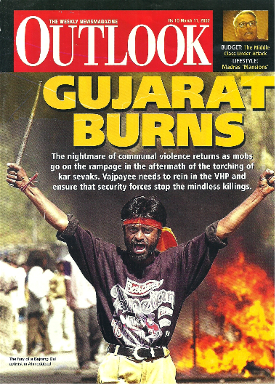
In India’s grievous history, the Babri Masjid Hindu temple had stood on holy ground near a place called Ayodhya, not far from the major western city of Ahmadabad in the State of Gujarat. Previous conflicts between the militant Muslims and the radical Hindu sects had resulted in the Muslims desecrating the holy site by destroying the Hindu shrine and building in its place, on the very spot, a Muslim mosque. 

In 1992, the Hindu radicals had attacked the mosque and had torn it down piece by piece and burned it. Riots broke out across India where thousands of people were either killed or injured and surrounding properties were burned or looted. The Hindus made a declaration that they would rebuild their temple and reconsecrate the holy ground. They had declared that on the 15th of March, 2002, they would march to the holy site with a sacred stone called a “Shila daan stone” that would commemorate the official beginning of the temple construction. The Shila daan stone consisted of two heavy carved slabs of stone carried from Mount Govardhan to be used in the construction of the foundation of the new temple. Earlier, the Supreme Court had ruled that the Hindu temple should not be rebuilt, and the government purchased the surrounding property in order to block the building. But none of that was going to stop the Hindus from delivering the heavy stones and reclaiming the lost honor of their gods, which had suffered for such a long time under the Muslims. Hindu pilgrims began taking the public trains to Ayodhya to support the move to rebuild the Hindu temple. 

On Wednesday, February 27, 2002, the Indian trains were packed with passengers headed to Ahmadabad. The Sabarmati Express had just pulled into the Godhra station. Muslims were at the station shouting anti-Hindu slogans. The train pulled out of the station only a short distance when someone pulled the emergency stop handle. Immediately, the stopped train was attacked by rock-throwing Muslims, who began smashing out the windows of the railcars. 

The frightened passengers in a second-class sleeping car pulled down the shades and locked the coach doors. Soon burning rags, Molotov cocktails, and bottles of acid landed inside the train car while the attackers doused the outside of the coach with gasoline and kerosene. Almost immediately, sleeper car S-6 and the adjoining coaches were on fire. There was absolutely no escape for the passengers inside who were burned alive.

Of the fifty-eight people who burned in S-6, twenty-six were women and sixteen were children. An additional fifty or more were injured in the burning ambush. Then rumors quickly spread that in order to teach the Hindu pilgrims a lesson, the Muslims had also kidnapped and raped Hindu women. 

Riots broke out all over India. Hundreds of people were being killed, and properties were being torched in Bombay, Ahmadabad, and Hyderabad, and as far away as New Delhi and Calcutta. Everyone figured that the violence was only a precursor to what might happen on March 15th when the Hindus marched to Ayodhya with the heavy Shila daan stone. 

Our trip was scheduled to put us into India on March 12. From Bombay, we were to travel by train—the same Sabarmati Express train—to Surat, in the state of Gujarat, right through the city of Ahmadabad. That was where the train cars had been stoned and burned, and all the people killed. That was where the worst of the riots were taking place. Our airplane landed in Bombay at 2:00 a.m. Messages were waiting for us at the front desk to not take the train and to not travel north to Gujarat state. By breakfast, two of our hosts met us at the hotel and insisted we travel with them south to Hyderabad, where Anna Marie and I would be safe for a few days. Eventually, calm was restored across India and we were able to perform all of our needs assessment studies in the flooded areas of eastern India. We also flew into a military airport in Gujarat state and determined where Project C.U.R.E.’s help would be targeted in the tragically decimated earthquake areas. 

As we were hop-scotching across India, avoiding the rioting, I had some time to reflect. Just months before the India episode, Rudolph Giuliani had responded to the terrorism of 9/11in New York by saying, “We can't accommodate terrorism. When someone uses the slaughter of innocent people to advance a so-called political cause, at that point the political cause becomes immoral and unjust and they should be eliminated from any serious discussion, any serious debate.” Terrorism is carried out in a calculated fashion. The terrorist supposedly fights to remedy wrongs. But for righting the wrongs, his only solution is the destruction of the structure of the society or culture. 

To complicate the India encounter, this grudge between the Muslims and Hindus had been going on for a long time. The grudge had simmered and simmered and began to boil in 1992 with the destruction of the Babri Masjid. Another layer of complication existed because it had to do with a religious conviction. Paschal once stated that, “Men never do evil so completely and cheerfully as when they do it from religious conviction.” And it certainly is not a new thing for people to use God to justify the unjustifiable. 

Hate and bigotry seem to be learned responses. I don’t think people are born to hate other people or cultures or religions. They learn that characteristic through being taught. And if they can learn to hate and carry long-time grudges, then it seems to follow that they can be taught to experience and embrace love. In fact, I have come to believe that love comes a little more readily to the human heart than does bigotry. As Martin Luther King, Jr. used to say, “Darkness cannot drive out darkness; only light can do that. Hate cannot drive out hate; only love can do that.” 

There was one more thing that impressed me about the Shila daan stone situation and the massacre of all the people in India, beginning with the burning of the loaded railroad cars. Life is too short and the alternatives too dangerous, and too expensive, to carry a grudge. 

The two big slabs of carved rock that comprised the Shila daan stone were heavy. The folks who carried those stones put forth great effort and paid a tremendous physical price to humanly transport those stones to the temple site in Ayodhya. But even though the Shila daan stones were heavy, they were, in truth, not the heaviest stones in the story. The heaviest stone you can carry is not a Shila daan stone . . . the heaviest and most dangerous stone you can carry is a grudge stone. If you are carrying a heavy grudge stone today, let me encourage you to take a deep breath and just let it fall to the ground. The whole world will be better off!


Skullduggery in Somalia

It is imperative that integrity be the cornerstone of any endeavor where everyone is expected to be better off. Napoleon Hill declares, “I fully realize that no wealth or position can long endure unless built upon truth and justice; therefore, I will engage in no transaction which does not benefit all whom it affects.”

I agree with Warren Buffet’s curt advice about employing people: "In looking for people to hire, you look for three qualities: integrity, intelligence, and energy. And if they don't have the first, the other two will kill you." Integrity is a precious commodity, and when it is compromised or put up for sale in the market place of life, the result is always moral and cultural bankruptcy.

Integrity has to do with consistent behavior stemming from a core group of values or virtues. When we speak of someone’s integrity, we often use descriptors like, honesty, principles, truthfulness, strength of character, or incorruptibility. Probably, the most common descriptor used for the lack of integrity is hypocrisy, because there is an observable disconnect between the projected expectation and the actual behavior.

While working in Somalia in 2001, I was shocked by two glaring examples of the loss of integrity that impacted the culture of that historic nation. The first had to do with the presumption of the citizens that the new president possessed integrity, intelligence, and energy. In the early days of his regime, Siad Barre had dreams of unifying the twelve major tribes of Somalia and developing a strong economy by emphasizing national loyalty and pride instead of clan individualities.

He realized he needed outside help, and readily fell into the trap of accepting “help” from the Soviet Union. He swallowed the Marxist-Leninist ideals of communism and controlled markets. Those concepts and practices were an irritant to the independence and more entrepreneurial tribal clans of Somalia.

The Russians, along with thousands of Cuban troops, came creeping in, wrapping their tentacles around every life-giving artery of Somalia. Trying to rid himself of the Soviet entrapment, Siad Barre began endearing himself to the United States. He played the Soviets against the U.S. in order to get his best deal. The U.S. wanted to stop the Soviet aggression in Ethiopia as well, and the Russian’s expansion throughout Africa, so they agreed with Siad Barre to pump millions of dollars of aid money into Somalia and arm Siad Barre with the latest and most sophisticated war weaponry to protect himself from the Russians.

When the Soviets began pulling out, economic growth began taking place. Siad Barre became enamored with his own greatness and power, and his regime assumed a cultist personality intolerant of any challenge or criticism. The people of the different tribes resented the elitist cruelty. Barre abandoned all thought of unity and resorted to control by pitting the twelve tribes against each other, and the clan warlords began plotting the assassination of the leader. All of that chaos became the setting for the TV coverage of Somalia we received in the U.S. and for the “Blackhawk Down” episode in Mogadishu. Wherever there were pockets of discontent, he would send his trusted troops in to machinegun down all the livestock herds and throw into prison anyone who might speak out against him. He even sent his men into the northern area to poison the water wells of his own people. Eventually, he utilized his military arsenal of bombs, tanks, airplanes, rifles, mortars, and other weapons that had been supplied to him by both the Russians and the U.S., and employed them to murder his own people.

He visited the northern seaport city of Hargeisa (population of a half million people) and declared he would punish them for their disloyalty. He loaded the bombers given to him by the Soviets and U.S., deployed them from Hargeisa’s own international airport, and had them destroy the buildings, water systems, industries, and homes in an effort to ethnically cleanse the disloyal people of the north. Very seldom in history can you find anything as sinister or evil as what President Barre perpetrated upon Somalia. He also strafed and bombed his own cities, like Berbera and Burao, and eventually, Mogadishu. The entire country of Somalia was left in shambles.

After twenty-one years of murder, deceit, and skullduggery, Siad Barre foiled an assassination plot and escaped with his money to Kenya, then to Zimbabwe, and finally he died in Nigeria. He possessed intelligence and energy, but lacked integrity.


My second glaring example of perfidy and treachery in Somalia included the United Nations.

During the genocide, Somali citizens were desperately trying to escape as refugees and appealed to the United Nations High Commission on Refugees for help. Somehow, the rampant lack of integrity flooding over Somalia likewise washed over the U.N. The incident took place while I was in Somalia and became a textbook case of “mess up” and disgrace. The United Nations’ employees who were in charge of filling certain refugee quotas into countries such as Great Britain, Canada, and the United States were charging the refugees anywhere between $3,500 and in some cases, in excess of $5,000 U.S. money to process their application and place them into the country. That money went straight into the pockets of the individual U.N. employees. They would make the penniless refugees pay fifty shillings just to get inside the waiting room to talk to a U.N. individual. It was discovered that the U.N. employees would actually sell false documentation, phony identification papers, and bogus case histories to allow people who were not even refugees to be able to be “resettled” in the United States. The U.N. admitted that four staff members were suspected of soliciting money from the displaced persons they were paid handsomely to assist.

The U.N. officials came to the defense of their workers by building the case that the U.N. workers were really the “victims” in the situation. The U.N. had been informed for the previous two years of the employees’ scam, but claimed that the employees were placed in very difficult and stressful positions. Outside people just couldn’t understand the terrible and unbearable position of pressure and temptations the employees had been subjected to when there were nearly a quarter of a million people seeking to be placed into developed countries, and only 8,000 to 11,000 immigration spots had been made available by the well-off countries.

Finally, the United Nations directors gave the U.N. workers new assignments elsewhere, where the pressure would not be so unbearable. But they made that decision only when some refugees, who had paid their $5,000 and still never got selected to go to the United States, threatened to kill the extortionists. The U.N. had to then make a move to protect their poor, victimized representatives. No one had been brought to task or punished for the bribery scam. The U.N. employees had intelligence and energy, but did not possess integrity.

It really was not safe to go into Somalia when I did. There was no central government, no rule of law, no infrastructure, no civilized politics or security. But, the Somali community of Denver had literally begged Project C.U.R.E. to go there with one of their members and assess the medical needs of Somaliland, since the entire healthcare delivery system of the country was tragically broken, and all of the medical facilities had been sacked of supplies. We felt that Project C.U.R.E. could significantly alter the healthcare delivery system and greatly influence the everyday life of its people for many years to come.

I was astounded at the absence of integrity characterized by the Somalia mess, and was reminded of an old Rwandan proverb I had learned in Kigali: You can out-distance that which is running after you, but not what is running inside you.

I believe that sometimes we are commissioned to go into dark situations with the match of goodness to rekindle the flame and fan the fire of lost and compromised integrity.


Russian Rockets and the Power of Goodness, Part 2

It was late Tuesday, May 25th. My time was running out. My Russian visa was to expire at midnight, Wednesday the 26th. The Moscow airport declared that all flights were full and would not sell me a ticket for an earlier flight than my originally scheduled flight for Friday, May 28. Even the Russian Aerospace officials could not get them to budge. It looked like I would be spending some time in the Moscow jail and be paying a huge fine. I decided to try a different approach. I called back to Denver and asked Douglas to contact a United/Lufthansa airline desk and see if they would sell me a ticket from Moscow to either Frankfort or Munich, Germany, at about 10:30 p.m. on the 26th. “It’s a done deal,” came his reply minutes later. Now, I had a legitimate reservation in the system that the folks in Moscow would have to acknowledge. Now, I really had to get to work in the time I had left.

Tuesday evening a meeting was called where I was introduced to all the Lockheed Martin team, the NPO Energomash rocket folks, and the Moscow and Khimky medical officials. I was able to explain what Project C.U.R.E. would be doing to bring relief to the depleted medical system that was serving the Russian Aerospace scientists and technicians. I bragged on Lockheed Martin’s desire to help the Russian scientists in their time of family need. We explained the time pressure we were under to see and assess all the medical facilities before I had to leave. They were all extremely appreciative and cooperative. 

During the hours of Wednesday we were able to visit and assess all the major hospitals and polyclinics within the Khimky area. I was very pleased I had brought with me some gifts. I had lugged the medical books, the Colorado photo books, and the new stethoscopes with me all across Africa and England. But it was worth the effort. The doctors were so overwhelmed whenever I would make a presentation of a gift. Lapel pins were important status symbols in Russia. At one point, Dr. Alexander removed his trophy lapel pin commemorating the sixty years of space endeavors at Khimky and pinned it onto me. I was moved by his show of honor and affection. When it came time to present him with a gift, I gave him one of Dr. Netter’s collector’s books on the Anatomy. He could hardly speak.

Dr. Boris Pavlov was eager to point out something quite new to his hospital facility. He just smiled and grinned at me when he showed me the new Russian Orthodox Chapel that had recently been built within his hospital. There, , doctors, nurses, and patients alike, could go and pray to God. I thanked him for showing the chapel to me. He said as soon as I spoke he knew that I was a sincere Christian.

I was dead tired, but I had requested one more official meeting. It was with the Russian customs authorities to thoroughly discuss the shipping in of the donated medical goods. The meeting proved to be one of our most productive meetings while in Russia. The director estimated how much value to declare on each container load of the donated medical goods, and gave me other absolutely necessary tips for a successful delivery.

After some hassle from the airlines and customs folks, I was able to board the earlier flight and leave Moscow for Frankfurt, Germany, about an hour before my visa expired. Lockheed Martin had never needed to be convinced of the superior design and function of the Soviet rockets. By purchasing the store of Soviet rocket engines, at least three things were accomplished: (1) the U.S. program was able to sop-up the inventories of rockets out of Russia, adding to U.S. national security; (2) Lockheed Martin would be able to corner the market on supplying rocket engines for future space travel and commercial launch in satellites and exploration vehicles; and (3) the advanced technology of the Russian program would be available not only in hard metal merchandise, but also in intelligence and manpower of the Russians to the American space program.

It really was an historical event of great significance when the two nuclear superpowers of the world were now joined in a common program of peaceful achievement. Project C.U.R.E. had been able to play a very small, but very key, part of what had transpired with the NPO Energomash and Lockheed Martin joint venture. I was told later that not only did President Boris Yeltsin approve and sign the deal, but encouraged the process, because of the love and concern that the American scientists had shown for the struggling Russian rocket scientists of the aerospace program.

Roman philosopher Seneca once said, “It is not because things are difficult that we do not venture. It is because we do not venture that they are difficult.” I am coming to understand more and more that there is great strength in kindness and gentleness, and our acts of kindness are really stepping stones to our own fulfillment. At any rate, I have decided to see if we can continue to significantly shake our world with kindness and gentleness. I had been away for nearly the entire month of May. I was returning home very tired, but I believed I was “the happiest man in the world.” Hearing later of the successful inaugural launch of Lockheed Martin’s Atlas III rocket powered by the Russian RD 180 rocket engine really made me a happy man! 


Russian Rockets and the Power of Goodness, Part 1

On May 14, 2000, I received word that the very first American rocket equipped with a Russian RD180 rocket engine had blasted off from launch pad 36B at Cape Canaveral, Florida. My eyes raced to read the details. The propulsion system designed and built by the Russians had launched the inaugural Lockheed Martin Atlas III rocket carrying a Eutelsat W4 communications satellite into active duty. I shivered. 

In 1996, I had the opportunity of becoming friends with Robert Ford, Lockheed Martin’s program manager. He loved what we were doing around the world with Project C.U.R.E., and teams of employees and executives from Lockheed Martin would frequently come to Project C.U.R.E. and help us sort materials, pack cases of medical goods, and help us load the ocean-going cargo containers. A couple of years later, Robert asked me a rather unusual question: “What are you specifically doing for the people of Russia?” I replied that from the first days after the fall of the Soviet system, Project C.U.R.E. had been in the countries trying to meet the medical needs not only of Russia but of all the old Soviet Federation. 

Robert’s second question was, “Are you specifically doing anything to help the Russian scientists in and around Moscow? Are you aware of the terrible plight of the disenfranchised technicians and scientists, and are you presently involved in helping them in any way?” My answer was not complicated: “If the scientists and their families have been part of any of the local area hospitals or polyclinics where Project C.U.R.E. has shipped donated medical goods, then their lives have, no doubt, been affected.

Robert then went on to explain that they had been dealing with the scientists at the highly secured Khimky scientific complex near the Moscow airport. Since the political demise of the country and the economic bankruptcy of their system, even the most respected scientists and technicians of the old Federation had been cut off along with their families from any access to medical services or salaries. The hospitals were empty of the most basic medical supplies, and even their polyclinics were without simple essentials.

“As a community of fellow scientists,” said Robert, “we would like to come along side our new Russian acquaintances and their families and help them out in their time of medical need. We have worked with Project C.U.R.E.in the past and would be proud to have you partner with us to see if we can make a difference. If you will furnish the donated medical goods to replenish their system, we will underwrite the shipping expenses.” I tried to explain that we had always worked from the premise “take what you have and allow it to become what someone else needs.” If you wish to experience peace, then provide peace for someone else.

Lockheed Martin was aware of the fact that Project C.U.R.E. required a needs assessment trip to any location requesting our help in order to accurately determine the appropriate medical goods to be donated. We agreed that we would make the trip in May, 1999. Project C.U.R.E. agreed to a significant gifting plan that would be structured over five years and would replenish millions of dollars of medical goods into the deficient hospitals and clinics of the Khimky community. I would simply tie the Moscow venue onto the assessment trips I already had planned to Dakar, Senegal, Nouakchott, Mauritania, and London during the month of May.

Lockheed Martin had become interested in purchasing from the Soviets the inventory of super RD 180 rocket engines out of their bankrupt aerospace program. The procedure for making the purchase was very complicated from both the U.S. and Soviet sides. The whole agreement was contingent upon the approval and signature of President Boris Yeltsin.

Moscow, Russia, is not my favorite city in the world. But, I was presuming that my friend Robert Ford would be at the Moscow airport to pick me up and everything would be fine. I had been in and out of Moscow many times and I found myself with feelings of irritability and apprehension each time I prepared to visit. I had many good friends in Russia and throughout the Old Soviet Union, and fond memories associated with many of my trips. But, there was something edgy about the city of Moscow. If they could hassle you over the slightest detail, they would. If they could take advantage of you as an American, they would. I found many of them were rude, even toward their own people.

While standing in line to clear customs, my mind went back to the time the customs official at Moscow just arbitrarily took out of my passport my visa for Kazakhstan. I protested loudly and told him the visa was my property and I needed it to enter Aktav as I continued my journey. The official gave me back my passport, but without my Kazakhstan visa, and the only explanation I could get was that they didn’t like or approve Kazakhstan since they had withdrawn from the Union. My further protests got me absolutely nowhere, and eventually I had to go through the process of purchasing another visa at the border of Kazakhstan.

When I exited customs, I did not find Robert, but I did see a nice big sign reading, “Dr. James Jackson.” Jim Sackett, a Lockheed-Martin employee, would be my Moscow host. Robert was detained in Denver and had to cancel the trip. We went directly to the Aerostar Hotel. Once checked in, I sat down with Jim and reviewed the agenda for the days I would be there. Before I went to bed, the personnel at the front desk notified me of a potential problem I might have with my Russian visa. The woman said, “Dr. Jackson, you say you will stay with us through the night of May 27th and check out on the 28th. But it is against the Russian law for a hotel to rent a room to a person whose Russian visa has expired. Your visa expires on midnight the 26th of May. I think you have a big problem.”

I thought to myself, “Why am I surprised that I have a technical problem over which I am being hassled here in Moscow?” I told the lady at the desk I would look into the problem the next day.

I had figured that the departure date on my Russian visa could very easily be extended for one more day. I was so wrong. The officials at NPO Energomash took my passport and visa and approached the customs and immigration folks in Moscow. Even with all their clout and influence, the visa people said “nyet, if he remains in the country one minute without a valid visa, he will go to jail and pay a very huge fine.”

Tuesday morning Jim picked me up and we drove to the gated and closed city of Khimky community. Within those walls and behind those fences was some of the tightest security in the whole world. It was there the Russian rockets were designed, developed, proto-typed, tested, and installed. There they had built the world’s most powerful and most efficient rockets. The U.S. scientists had developed their products along an entirely different design and philosophy. No one had ever disputed the superiority of the Russian rockets over any others developed to date. It had all taken place over the years, right where I was now standing.

After lunch we walked into an experience that I shall never forget. Passing all kinds of security, I was led right into the building complex where the designing, building, and testing of the famous Russian rockets had taken place. Jim leaned over to me and said, “You are now among a very small handful of officials from the West who have ever been permitted to pass through these doors and see what you will now see.” 

The head of the Russian Aerospace Agency met me and personally directed my tour, pointing out the historical progression of the Russian rockets since 1908. He kindly answered all of my questions and pointed out the difference in basic design between the U.S. rockets and the Russian rockets. It was easy to see why they could get over three times the thrust, efficiency, and payload-lift out of their design. What used to take three separate rockets on the end of an Atlas Rocket of the Americans, the Russians could accomplish with only one of their machines. Their design relied on fewer moving parts and a concept of super-heating the fuel before it was re-injected into the combustion chamber.

He showed me the rocket engine which had thrust Sputnik into orbit and the rocket engine that had put the Soviet astronauts first into space. I asked about the huge clustered rocket engines which were painted green. He told me that those rockets were the ones that during the Cold War were loaded with nuclear warheads and aimed at every major city in the U.S.

When the Director concluded my tour, I asked if I could possibly have a photo of the two of us in front of the rocket engines. I fully expected to have him laugh and good-heartedly deny my request. But he answered, “Sure, Dr. Jackson, it would be my privilege to be photographed with you in front of the world’s largest and most powerful rocket engine. After all, you are now one of the family.”

While we were leaving the building, the NPO Energomash security once again updated me on my visa problem. The Russians were not going to budge an inch. My flight to leave Moscow was scheduled for after the time my visa would expire. It looked like Dr. Jackson had come all the way to Moscow to assess all the hospitals and clinics of the aerospace community, but would be sitting in a Moscow jail. The officials were having no success at all in booking an earlier flight or rerouting me out of Moscow. I was in an embarrassing, diplomatic mess.
                                              

(To be continued February 12, 2013)


Tribute to the Koreans

In order for an historical atrocity to become a positive and teachable experience it is necessary and sufficient to accurately recount the incident for those who follow. Few practices in history are so devilish as the false and purposeful revisionism of factual matters. I want this short story to highlight a little known occurrence in history, and honor the character and culture of the Koreans during a sad and dark time of their history. 

In my early travels to northern Russia, and especially as I made my way across the Caspian Sea to Kazakhstan, Uzbekistan, Kyrgyzstan, and Afghanistan, I continually met up with some of the most dedicated and compassionate expatriate doctors, nurses, and teachers I had ever met. They were intently focused on their pursuits and willing to put up with the most severe and inconvenient circumstances. They were driven. They were Korean, and I soon began referring to them as my “Seoul mates.” 

I had met and worked closely with John Kim and Dr. Choi of Messengers of Mercy,centered in Chicago. Kim had traveled with me to Afghanistan and Albania, and had introduced me to a Korean husband and wife medical team, Dr. Jae Doo Shim and Anna. They had found a piece of property, bought it with their own money, personally designed and built a two-story clinic. “We never knew where we would ever get the necessary pieces of equipment or the necessary supplies to run this clinic … but then God sent Project C.U.R.E. to help finish our dream.” I asked John Kim, “Where are all these excellent Korean doctors coming from? They are absolutely the best!” 

Project C.U.R.E. was being requested to help many Korean medical and ministry organizations working in Central Asia: Daniel Kim, CEO of The Young Nak Foundation from Seoul, Korea, CAFÉ (Central Asian Free Exchange), and the doctors Joshua Koh and Herbert Hong, representing the IACD (Institute of Asian Culture and Development). I slowly began to understand that Project C.U.R.E. had landed in the middle of an incredible miracle story of love and international compassion. All those Korean doctors and organizations had heard the distinct call for help from the dim shadows of their lost kinfolk just as soon as the old Soviet curtain of secrecy and silence had come crashing down. The very call had emboldened them, and had ignited their passion to help their betrayed and violated brothers and sisters. Nothing makes a person as strong as when he hears the call for help. 

The brutal invasion and occupation of the Koreans by Imperial Japan resulted in many of the Koreans escaping into Russia. The Koreans were diligent workers and good businessmen and became successful landowners and farmers. During the 1917 Russian revolution, most of the Koreans sided with the Bolsheviks. But, as Joseph Stalin and the Communists began to steal the revolution away from the Bolsheviks, the landowning Korean entrepreneurs were seen as untrustworthy by the comrades who lusted after their productive farms. 

By 1926, Koreans represented more than a quarter of the rural population of the Far East Vladivostok, Russia, region. A secret plan of ethnic cleansing was adopted under the idea to resettle the Koreans, “on suspicions of disloyalty to the Soviet Union.” The propaganda claimed that it was to stop any possibility of penetration of Japanese espionage. Joseph Stalin’s plan of systematic population transfer moved into high gear between September and October, 1937, moving over a quarter million Koreans to Kazakhstan and Uzbekistan in Central Asia. Orders called for an immediate removal of the Koreans, to be totally completed within ninety days.

Orders called for the Koreans to be transported by railway trains of about fifty carriages each, with twenty-five to thirty people per carriage. Travel to the undisclosed destinations took between thirty and forty days. To accomplish the quicker time schedule of movement, people were simply crammed into the cattle cars without heat or other provisions. Multiplied thousands of the Koreans never even survived the trip. One survivor wrote of his arrival at an unknown destination, “Each family dug a hole to live in. We made a Korean ondol (heated floor). We burned bushes for heat. There were no trees or charcoal. We lived that way for two or three years.” Many Koreans were placed far from each other in isolation to prevent contact with each other. Thirty-four thousand Koreans were placed on the desolate outpost of Ushtobe, Kazakhstan, with no food and no shelter, and were forced to survive on their own for almost three years. Thousands died of starvation, sickness, and exposure during the first few years in Central Asia. 

Project C.U.R.E. was working right where most of the displaced Koreans had ended up during Joseph Stalin’s murderous transmigration scheme. Now, the Koreans had lost their own identity and even spoke only Russian. 

One such Korean family I met, that had come to Uzbekistan to help, represented the Good Samaritan Medical Aid Foundation. Dr. Chong Soo Kim had started out his medical career in Seoul, Korea, as a neurosurgeon. In 1971 he traveled to Indiana University Medical School and certified as a U.S. anesthesiologist. But, in 1994, Dr. Kim heard about the plight of the Koreans in Central Asia and decided to take his family and go to Uzbekistan. They sold everything they owned and he walked away from a good job paying well over $300,000 a year. 

Dr. Kim was met by the harsh realities of Uzbekistan. Offering medical service was a way to establish a relationship with the local people. But there were problems with the local authorities. 

There was a great shortage of medical training in the Tashkent Oblast, so Dr. Kim began offering medical classes where he would teach Western medicine. Most medical textbooks in Uzbekistan were over twenty years old and written in the Russian language. Dr. Kim started teaching out of American textbooks. That required the students to learn English. Dr. Kim’s daughter moved from Evansville, Indiana, to Tashkent to help teach the students English and Korean. 

Dr. Kim had been able to purchase an old Soviet kindergarten school in the city of Almayk. When he purchased the old facility, the buildings were terribly run down and the gardens consisted of only weeds. He used his own money to repair and remodel the facility into a very delightful clinic site for the city. All he needed now was for Project C.U.R.E. to come and fill the building with pieces of equipment and medical supplies. We not only furnished his facilities, but went to the local government hospital in Almayk and sent needed supplies and pieces of equipment to them as well! 

As I continued to work with the heroic Koreans in Central Asia after the fall of the dismal Soviet system, my heart would at times nearly burst with compassion and pride for the thousands of Koreans who responded to the urgent call for kindness, justice, and righteousness. In my quiet moments I would think: 

Show me your hands, are they scarred by compassion?

Show me your feet, have the rough trails left them bruised?

Show me your heart, has it been broken in love for your wounded brothers?

I salute my Korean friends!


Challenges (Part II)

Character cannot be developed in ease and quiet. Only through experience of trial and suffering can the soul be strengthened, ambition inspired, and success achieved. Helen Keller

Once Dr. Singh had meticulously inched his way across the downward moving Himalayan glacier, there was no thought even given to whether we would turn back or go on. Dr. Singh and Dr. Wangmo pressed forward to get me to the Spiti Valley, and more immediately, off Rotung Pass and the sixteen-thousand-foot Kunlom Pass. Between the passes we stopped amid the gigantic boulders of the bleak valley at a crude bridge that crossed the Chandra River. Some friends of the Singhs ran a “dhabz,” or roadside café, out there in the middle of no place. They weren’t out there to make a lot of money from the tourists, because there just weren’t very many silly people out there visiting Mr. Roger’s neighborhood. But the old weather-worn Hindu couple felt that someone needed to be available with food, fresh-brewed black tea, and matches for the “at risk” travelers going that way. By then, the frigid temperatures had plunged and the blue plastic tarps that served as the roof flapped furiously at the timbers to which they were tied. The walls were piles of stacked stones. There were no window openings, just one doorway in the front made of another flap of blue plastic tarp.

When the crusty old man saw how I was dressed, he quickly pulled off his coat and made me put it on. He told me I would need it in Kaza and to just return it on our way back down the mountain. The soup they served to us was dark green in color and thick in consistency. I could make out that beans were included in the ingredients, but as to what else I could not tell you. 

The hot, strong, black tea was also thick and sweetened like syrup, but it felt good as it ran its course from my mouth to my empty stomach. While the old man kept the fire going inside his stacked-stone stove, the old woman rolled out corn chapattis on a flat rock with a round smooth river rock and fried them on a piece of flat, blackened iron balanced atop the fire. 

We finished our lunch, thanked our gracious hosts, and resumed our journey. As we continued to gain altitude in our Gypsy 4x4, we moved from the bleak tundra landscape to mountain elevations that contained absolutely nothing but dark brown and black volcanic gravel. As we drove across one rock slide area of about a quarter-mile in width, Dr. Singh explained to me that they were probably the most dangerous areas on the mountain face. “You have to travel across them if you traverse the face of the mountain. You can’t go above or below them because some chutes were thousands of feet in length up the mountain,” explained Dr. Singh. But the idea was to never stop while going across a rock slide chute. Even if there was an obstacle in your way, you must never get out of the auto. The driver must always be behind the steering wheel and keep moving. The rock slide areas were extremely unstable and just the movement of the wheels could be enough to set the slide into thunderous motion down the endless mountain. 

It had turned completely dark as we rode on. We had to make it to Kaza, simply because there wasn’t any place else to stop and stay the night. Finally, Dr. Wangmo gave out a squeal of delight. We had just passed where they used to live and had their clinic. Even though there were no street lights or welcoming signs, we had entered the town of Kaza, where we would spend the night. It was 9:45 p.m. and all the lights were out. The doctors Singh and Wangmo were very good friends with the people who operated the only “hotel” in Kaza. Dr. Wangmo ran in and awakened the owner and his wife. They came out to greet us and hurried us to the frosty kitchen to fix us some more black tea. 

When morning came, I could hardly believe how happy the doctors were. They just kept talking about how important it was for me to travel to Kaza and the Spiti Valley. It was cold outside and I was glad for the musty borrowed coat. The view of the snow-clad Himalayan peaks was breathtaking. But the immediate surroundings of Kaza were pretty bleak and brown in color. Nothing grew there of its own accord. The people in the Spiti Valley were considered lower on the Indian caste system. We had crossed over Old Tibet the night before, and we were only two miles from China. Doctors Singh and Wangmo had lived there with the people for over six years, and the townspeople were thrilled to see them, and excited that in the future there might be access to increased medical care. 

After a breakfast of chapattis, rice, and black tea, we left the hotel. It was a bright and crisp morning and hard to believe that only days before I had been in the sweltering heat of 120 degrees in Delhi. We had to retrace every bump and rock and flowing waterfall we had crossed the day before. 

With it being dark as we entered Kaza, I had missed a lot of the grandeur. Just outside the town, plastered tightly against a rugged stone cliff, was an ancient monastery. Later, His Holiness the Dalai Lama would be there to teach and pray for world peace at the key monastery. A lot of people would make the pilgrimage to Spiti Valley for the occasion. 

The old Tibetan valley floor in Spiti was higher than any of the mountain peaks in Colorado. During the daylight drive back, I marveled at the road we had passed over the night before. In many places the road had been chiseled out of the granite face of the mountain and just hung there totally unprotected and without the hint of any guardrails. We stopped long enough along the Chandra River at the “dhabz” to return the coat, and had some more tea and a couple of biscuits with the old couple. As we approached Kullu Valley, I asked Dr. Singh how many times over the years he had crossed those two passes on his way to Spiti. “Well over 500 times,” he said. “Well over 500 times but never, ever, in the month of May.” 

Yes, we were able to successfully help deliver urgently needed medical goods to the doctors Singh and Wangmo on the northern borders of India, and as Robert Frost once penned, “Courage is the human virtue that counts most—courage to act on limited knowledge and insufficient evidence. That's all any of us has.” 

However, in dealing with the subject of challenges, I have personally decided that next time I am confronted with such a significant challenge, I will first try to expand my limited knowledge and insufficient evidence of the challenge, and especially try to stay away from moving glaciers on the face of twenty-thousand-foot Himalayan mountain peaks. 

(The full version of this story taken from Dr. Jackson’s TRAVEL JOURNALS from around the world will be published soon)