Only One Person

When I was thirty years old Anna Marie and I decided to give away all our accumulated wealth and start over. We decided to start listening to a different drummer and restructure our value system. I decided to “Give the Best of my life for the Rest of my life helping other people be better off.” That was the best business decision I ever made. That one decision set into motion unforeseeable consequences and an exhilarating adventure full of challenge and reward. That adventure took me to nearly every corner of this earth and taught me time and again,“To the world you may be only one person, but to one person you may be the world.”


One day my travels had taken me to Madras and Salem in the southern part of India.Project C.U.R.E. had promised to deliver donated medical goods to needy orphanages and medical clinics in the region. When I finished my agenda in India I traveled on to Singapore. My next venue was Hong Kong where I had meetings scheduled with a number of NGO leaders operating in mainland China. But in Hong Kong I had a most memorable meeting that absolutely had to do with neither governmental nor non-governmental agencies. 

Upon arrival at the Hong Kong airport, I hailed a taxi and rode to the downtown Kowloon Hotel. Once settled into my room, I made my way to the dimly lighted restaurant and ordered dinner. Minutes later they seated a white-haired gentleman at the table next to me. He was trying to read the menu in the near darkness and he had forgotten his glasses. I knew exactly what he was going through. So, without saying a word, I took off my glasses, leaned across the chair and laid the glasses on his table. It caught him so by surprise; he stumbled all over himself thanking me for noticing his plight. He admitted that he was about to randomly point to something on the menu and hope for the best. We began to chat and when I had finished my dinner and was finishing my tea, he invited me over to his table. 

My new friend lived in New Zea­land and was a successful businessman, coming to Asia often in his line of business. He had been buying and selling umbrellas for over twenty- seven years. He inquired about what I did, and I shared with him about Project C.U.R.E. He asked a million questions, and my answers kept getting more involved. He looked directly into my eyes and surmised, “You can’t do what you are doing without being a deeply religious man.” I told him that once I wasn't, but several years ago everything changed. That opened the flood gates of emotion for him.


He told me that just three weeks prior the diagnosis had been confirmed that he had can­cer . . . the same kind that had taken his mother within a span of 10 months after her diagnosis. They assured him that he would not have even the ten months to live. I went through two more cups of tea as I simply sat quietly and listened to him pour out his heart. He had it pretty well figured out what he was going to do with his business, but he painfully struggled as we discussed the effects his death would have on his wife and his grown children. “My wife begged me to not take this business trip to Hong Kong. But, I absolutely knew I had to travel from New Zealand to Hong Kong and check into the Kowloon Hotel. You reached over and loaned me your glasses . . . but you did more. You allowed me to use your vision and see through your eyes and discover hope and confidence and a future for my family.” 

I left the restaurant that night very humbled . . . just to think that God would bring one man from New Zealand and one man from Colorado all the way to Hong Kong in order to strike a match and kindle a flame of hope and encouragement in the heart of a needy traveler. “To the world you may be only one person, but to one person you may be the world.”


Trust Accounts (Part IV)

Deposited into your TRUST ACCOUNT is exactly what someone around you needs.

How is it possible that 80% of the male population of a civilized country could be brutally massacred in the 1990s without alerting the attention of the world? Yes, it happened! No, it did not occur in Africa. Yes, I was a witness. 

As far back as 340 AD the Armenians could trace their Christian religious heritage by church buildings and monasteries located throughout the area now known as Nagorno Karabakh. Throughout the centuries the Turks, the Azerbaijanis, and, later, “Stalin the Supreme” tried to eradicate the people of Karabakh. Stalin destroyed or closed down all the churches and monasteries, lined up the religious leaders and ordered them shot. He then totally cut off the Armenian enclave of Karabakh from the geographical borders of Armenia and presented Karabakh to Azerbaijan as a gift. 

During the 1990s the precarious fate of Nagorno Karabakh took another tragic turn for the worse. The oil cartels desired to build an oil pipeline from the Caspian Sea to the Black sea . . . right through the heart of Karabakh. Ethnic cleansing was determined to be the simplest solution for dealing with the nuisance population. They were perfectly isolated. No one would know. Former Azeri President Elchibey pronounced in June 1992 that if there were still Armenians in Karabakh in October of 1992, the people of Azerbaijan could hang him in the Central Square of Baku, the Azerbaijani capital. The atrocities were unbelievable at the hands of the Russian Fourth Army, the Turks, and the Azerbaijanis. 

One lone international figure became the voice for the voiceless in Nagorno Karabakh. Baroness Caroline Cox, Deputy Speaker of the House of Lords in London, stood in parliament and pled their case. She then went to the scene of the atrocities and actually rode in the helicopters helping evacuate the victims from Stepanekert, the capital of Karabakh, to hospitals in Yerevan, Armenia. 

Baroness Cox and her Executive Assistant, Stuart Windsor, contacted Project C.U.R.E. and requested that I join them in Yerevan, Armenia and travel with them to Karabakh. My research of the Armenian and Karabakh situation had somewhat prepared me for a cursory understanding of the history of the region. But I was in no way prepared for the emotional wrenching I would experience during my stay. 

While I was in Nagorno Karabakh, I agreed that Project C.U.R.E. would deliver millions of dollars worth of needed medical goods to the bombed out hospitals in the devastated country. I also promised to send enough pieces of physical rehabilitation equipment for them to open a rehab clinic to serve the crippled victims. 

But when I returned to Denver I was told that we had just sent all our physical therapy and rehab equipment to some other needy place around the world. We had none left in the warehouse. We needed a miracle. We made a list of all the pieces of equipment we would need to procure and send. We then hung the list in a conspicuous place. We all began to pray. 

Several weeks later Dr. Douglas Jackson and I took a walk through our warehouse. Justin, the man in charge of our warehouse, came running up to us with tears in his eyes. He was so excited! “Listen to what just happened!” he shouted. “This morning a company who sells medical equipment called and said they were discontinuing to sell rehab and therapy equipment and were donating everything they had in their warehouse to Project C.U.R.E. We just finished unloading their huge truck. Listen to this! . . . 

We took our written list in hand and as they began to unload the truck, we began to check off the pieces of needed equipment from our list. When they had finished unloading, every single item on our list had been checked off . . . every piece of rehab equipment we had written down has just now been miraculously delivered. What we needed to put on the ocean-going cargo container headed for Nagorno Karabakh was on that truck!” 

As Justin was telling us the story, this thought was exploding inside my mind: 

“Deposited into my Trust Account is exactly what someone else around me needs!” 

Review again some of the principles of the Trust Account concept: 

1. The inventory of your Trust Account (everything you possess) is there as a result of a Direct Gift or a Gift Exchange. 

2. The inventory is to be administered by you, the Trustee, for the Benefit of Others. 

3. As you, the Trustee, transfer inventory out of your Trust Account into the Trust Accounts of Others, God makes Compensating Deposits into Your Trust Account . . . thus allowing you to give Even More into the Trust Accounts of Others. 

4. God determines the Amount, Kind, and Timing of the Compensating Deposits . . . the Trustee is only responsible for the Current Inventory of the Account. 

5. Deposited into your Trust Account is exactly what Someone else around you Needs. 


Allow these concepts to change your life! 


Trust Accounts (Part III)

In the days following the collapse of the Soviet Union, I spent a great deal of time in the corridor along the Volga River from St. Petersburg to Moscow, Russia. The US Agency for International Development (USAID) had agreed to pay all the shipping charges ifProject C.U.R.E. would donate the incredibly needed medical goods to the area. In the city of Tver, I was hosted by the retired head of the elite Soviet Military Academy, General Yuri Tyulin. Following the coup, most of the top military personnel were notified that there would no longer be money to pay them. Desperation set in. In the evenings I was invited to meet with groups of generals and colonels and suggest ways to get involved in free market enterprises, like television repair, wood working, leather handcrafts and upholstery. Later on, I even sent used sewing machines to the officers so that with their labors they could earn enough to buy food.

One night a group of officers learned that I had a very early flight leaving Moscow. In order to make the flight I would need to leave Tver at 1:30 a.m. The officers protested, “You are not going to travel the road to Moscow at that hour. Even if you were not American, you would not pass through without getting robbed. The desperate criminals along that route would have no second thoughts about robbing you and perhaps killing you. The train is even less safe at that hour!”

The next morning my hostess, Galina Tyulin, prepared for me a hot cup of black tea and a small cake to take with me. As I stepped out into the frigid February night I was met by General Brice and Colonel Chols, retired Soviet Officers. I was placed in the rear seat of an old Russian Lada sedan with my luggage stacked on either side of me. The Lada was a virtual arsenal on wheels. Automatic weapons were on the floor in the front and very high powered, silent, gas-operated pistols were in the officers’ laps. The only thing the Lada lacked was any sort of heater. General Brice had to leave the front windows lowered to lessen the buildup of ice on the inside of the windshield. 

In route to Moscow, we did indeed see the occurrence of large transport trucks coming along either side of passenger cars and pinning them between. In tandem, the trucks would squeeze the car to the side of the road and thugs would rob the travelers. I simply pulled my top coat up over my ears and breathed a prayer of thanks. The officers successfully delivered me to the passport counter of the Moscow airport, and returned to Tver. My new friends, who had been trained all their lives how to kill me, put their own lives at risk to save mine.

While I had been in Russia, I had transferred into their Trust Accounts love, concern, attention, medical goods . . . oh, yes, and some sewing machines. God had orchestrated the transfer of a “Compensating Deposit” into my Trust Account, not of more medical goods and sewing machines, but something I really needed precisely at that time . . . safe passage to Moscow in the middle of the night! 

So far, in our study of “Trust Accounts,” we have discussed:

1. The inventory of your Trust Account (everything you possess) is there as a result of a Direct Gift or a Gift Exchange.

2. The inventory is to be administered by you, the Trustee, for the Benefit of Others.

3. As you, the Trustee, transfer inventory out of your Trust Account into the Trust Accounts of Others, God makes Compensating Deposits into Your Trust Account . . . thus allowing you to give Even More into the Trust Accounts of Others.

Now, let’s consider this:

4. God determines the Amount, Kind and Timing of the Compensating Deposits . . . the Trustee is only responsible for the Current Inventory of the Account.

Example: When Anna Marie and I made the decision to give away our accumulated wealth and start over again, we gave away, primarily, millions of dollars worth of real estate assets. God never made Compensating Deposits back into our Trust Account of multiplied millions of “like kind” real estate assets. But rather, over the ensuing years God has deposited hundreds of millions of dollars worth of desperately needed medical supplies and pieces of medical equipment into our Trust Account. We haven’t been responsible to give away any more real estate assets, but for the past 25 years we have been moving around in every corner of this earth distributing those donated medical goods into thousands of hospitals and clinics in 123 far flung countries.

God is very creative with his Compensating Deposits. Sometimes he gives back in like kind . . . sometimes he doesn’t. Sometimes he makes his Compensating Deposits according to our expected timetable . . . sometimes he does not. Sometimes he makes his Compensating Deposits in an amount we had in mind . . . then, he surprises us with abundance . . . but not usually in the way we had insisted. Usually, it takes us traveling down the road a way, then upon looking back, we say, “Oh, look at how God worked that out. It all turned out so much better than I could have ever imagined!” I would have asked for millions more in real estate. God knew I needed medical goods he could transform into safe passage from Tver to Moscow in the middle of a blustery Russian night.


"The Happiest Man in the World": An Excerpt

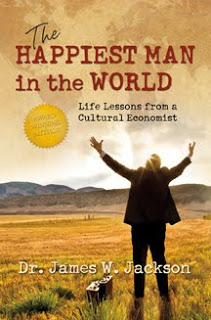
The Happiest Man in the World:  

Life Lessons from a Cultural Economist

By Dr. James W. Jackson, Founder of Project C.U.R.E. 

“At that moment I was slammed by a wave of unexpected compassion. I had crossed over a line. No longer was I a foreign economic visitor observing at an arm’s length distance. All the hurt and tragedy of what I had previously seen at the free clinics in the favelas with Lorena came crashing in. I saw not only the hurting people in front of me and heard the crying of the babies there inside Dr. Neves’s sparse clinic, but I felt the hopelessness of the millions of people in Brazil who were ragged squatters; the people who lived in the squalor and poverty of shanties with open sewers and impure drinking water; who faced the daunting and discouraging task of eking out their survival on the streets of the Brazilian cities. I hadn’t experienced the scorching flames of passion and empathy like that before. Nothing in the ego-centered churches of entertainment and comfort where I had spent my life had ever ignited the compassion I was feeling standing in that ramshackle house of a clinic in Brazil.”  ~ An excerpt from"The Happiest Man in the World: Life Lessons from a Cultural Economist." 


New Book!


From his personal experiences visiting some of the world’s poorest and most dangerous places, Dr. James W. Jackson describes the heartbreak of seeing children die of treatable illnesses simply because the doctors and nurses lacked proper medical equipment and supplies. He also shares the joy expressed by doctors and nurses who saw containers full of donated medical supplies arrive just in time to save a life. 

In his inspiring story, Dr. Jackson describes his varied life experiences including: childhood lessons in entrepreneurship, making millions in mountain real estate development, relinquishing his wealth in order to “start over,” serving as an international economic consultant, and later, founding the international humanitarian organization, Project C.U.R.E., which delivers donated medical supplies and equipment to developing country health care facilities.

The book provides an honest and personal assessment of the challenges and professional obstacles that confronted him, as well as best practices for building a “Business of Goodness.” Dr. Jackson challenges people everywhere to learn from his life experiences, and join him in becoming “The Happiest People in the World!”


Trust Accounts (Part II)

In the previous writing regarding our “Trust Account,” we discussed that all I possess today has come to me either as a direct gift from God, or has come to me as a by-product of a “gift exchange,” whereby I took something that had been given to me in the first place and simply traded it for something that I desired even more. Now, I have a fiduciary responsibility, as a “Trustee,” to manage my portfolio of possessions in such a way as to make other people around me “better off” instead of selfishly spending all those possessions on myself. 

We have been given our inheritance for a reason. The owner and grantor of everything has deposited into our Trust Account not only sufficiency for meeting our own needs, but possessions that are expressly for the benefit to others. We have the privilege to respond as “Trustworthy Administrators” and function as an integral part of a plan for meeting the needs of others around us. 

The economic and cultural soul of Romania had been ripped out and trampled by the greedy dictator, Nicolay Ceausescu, and his despicable wife. In 1989, the people of Romania rose up, kidnapped the pair with a helicopter, gave them an informal trial in a farm house and killed them on the spot. But the country was in shambles. Project C.U.R.E. was called in to assess the medical delivery system and to give help. 

Anna Marie accompanied me on one of my trips to Romania in 2002. We flew into Timisoara and drove along the Hungary-Romania border to the city of Oradea to perform our studies. On Sunday we were taken to the peasant village of Cefa where we joined village worshipers at a small frame church. The building included a wood-burning stove in the middle of the congregation, but the real heat came from the worshipers robustly singing from their Romanian books of worship. Average income of the peasant farmers was about $50 US per month. 

After the service, we were introduced to a middle-aged couple and informed that we were going to their house to eat Sunday dinner. They rode their bicycles ahead of us to their village farm about a half-mile from the little church. As we opened the gate the farmyard animals scattered. Above, was an ominous November sky and a cold, misty rain was falling, which made the farmyard a bit messy for walking. 

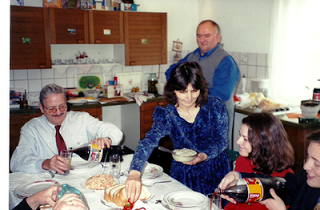
As we entered the house we were taken directly into the kitchen, which was the largest room in the house and appeared to be the only room with heat. The wife’s name was Marianna and she had already set the long table with plates and utensils. Even though none of the pieces matched, yet the arrangement placed on one of her homemade tablecloths made an attractive setting. 

Marianna had been working on her Sunday dinner for a couple of days. She had special bread baking in her wood-burning oven and a salad of peas, diced carrots, corn and boiled eggs on her rustic cupboard. Pans of chicken and roast pork simmered alongside her potatoes. I watched the peasant farm wife as she flitted through her kitchen. Her feet hardly hit the floor. She had chosen to wear her roadside-market-bought dress for the occasion. It was dark blue with a floral print and had a velvet-type material around the collar. Even though it was a size or two too big, yet the color complimented her dark brown eyes and black hair. But the real compliment to her appearance was the compelling radiance that enshrouded her entire being. She had tapped a gusher of happiness. She was entertaining foreign guests in her own kitchen. She was fully prepared and was enjoying every minute of it. 


About 15 minutes into our meal, four other people showed up at the door, including a Gypsy preacher and his wife. They were all expecting to eat. The little farm wife never missed a beat or seemed the least bit frustrated. She went into another room and brought to the kitchen another small table and four chairs. From somewhere she found additional mix-and-match plates and graciously seated her unexpected guests and began serving them as well. 

As we ate, I continued to be intrigued by the peasant farm wife. She was so happy in what she was doing. She was not allowing her obvious poverty to trump her spirit of creativity and generosity. Royalty lived within the rustic walls of that Cefa farmhouse. I would never forget the look of contentment in the eyes of the peasant woman. 

As we were leaving, the peasant woman was filling up plastic sacks with fresh vegetables, pickled cucumbers, squash and cheese for our friends to take home with them. As we were walking to our car, she made a mad dash to the barn and collected some fresh eggs. From somewhere that peasant couple, living along the border of Hungary and Romania without enough money to even fix their old Russian-made Dacia car, had found the true joy of living through the experience of giving. 

Happiness resides not in possessions hoarded for our own consumption, and not in tarnished gold hidden away in the secret recesses of our souls, but, rather, in the assurance that we are uncomplicated folks, grateful for what we have and graceful enough to share with others when we have the opportunity to help. 

Trust Accounts

Black’s Law Dictionary defines a “TRUST” as “A right of property, real or personal, held by one party for the benefit of another. A confidence reposed in one person who is termed trustee, for the benefit of another . . . Any arrangement whereby property is transferred with intention that it be administered by trustee for another’s benefit.”

Is it possible that all I possess has been given to me . . . and I am simply a “Trustee” . . . it was all deposited into my “Trust Account” to be distributed out to others in order to benefit those around me, instead of it being selfishly spent on myself?

Is it possible that I have a “Fiduciary Responsibility” to manage my portfolio of possessions in such a way as to make other people around me “better off”?

I have come to a place in my life where I really believe the above to be the case. I have also come to a place where I have empirically experienced the phenomenon where, as I transfer those things out of my “portfolio of possession,” there is some kind of terrestrial accounting system that kicks into action, and compensating deposits are strangely and generously placed back into my Trust Account so that I can give out even more!

My next statement makes me feel a bit sophomoric and silly, but in my early days of experimenting with this phenomenon, I actually tried to out-give God. I tried to see if I could transfer out of my Trust Account into the Trust Accounts of others faster than God could transfer compensating deposits back into my Trust Account. I failed miserably. I came to the consoling conclusion that I could not out-give God. The faster I would give it away, the faster he would put it back in . . . always with a bit more. I found that I always had something left over to give away again!

The other day I walked through the aisleways of one of our huge Project C.U.R.E.warehouses. Stacked high on the steel racks were millions and millions of dollars worth of medical supplies and pieces of medical equipment. At several of the overhead dock doors of the warehouse, ocean-going cargo containers were parked, being loaded for distribution to needy hospitals and clinics far away. At other dock doors were incoming trucks being unloaded of donated medical goods to be inventoried and processed. I was nearly overwhelmed with both a raging excitement and a deeply embedded peace, all at the same time.

Immediately, a scene replayed across the screen of my mind. I was in a very dirty hotel room in an area of high poverty in the old Soviet Union during the beginning days of Project C.U.R.E. I had just promised my new friends at the near-by hospitals and clinics that I would send them desperately needed medical supplies. “But what . . . ,” I was saying aloud to myself in the room, “what if I get home and I don’t have the needed goods to send to these people?” Then I heard from heaven. “You concern yourself with helping these people, I will give you just a bit more than you can ever give away.” As I have obediently given away out of my Trust Account, God has always faithfully replenished that Trust Account with generous compensating deposits allowing me to freely give again, again and again.

I believe that being a responsible Trustee with the things deposited into my Trust Account, and acting with a sense of fiduciary responsibility and resolute confidence regarding all that has been entrusted to me, is a great part of what makes me The Happiest Man in the World.

A Vietnamese Lullaby

I traveled to Ho Chi Minh City, Vietnam, where we had teamed up with an extremely talented group of surgeons, nurses and anesthetists that specialized in incidences of pediatric cleft palates and hair lips. There was a backlog of over 7,000 children needing maxillofacial procedures. The need was overwhelming. I accompanied the doctors to the children’s wards for their pre-op rounds. My heart and attention was drawn to one particular seven-month-old Vietnamese boy. His condition was one of the most forbidding I had ever seen. He suffered a complicated double hair lip, as well as an extremely severe cleft palate. There was so much of the face missing that I could look directly into the child’s sinus cavities. Obviously, the hospital doctors had given the team a most desperate and dramatic case to reconstruct.

As the young mother handed the baby to the surgeon, her eyes and expressions did all the talking. She was literally pleading for someone to help her and her critically disfigured child. Because of the baby’s condition, it was impossible for him to suck.  The mother was required to extract the milk from her breasts and use a spoon to feed him.  She had to be very careful as she aimed the milk so that it did not spill into the air passageway and drown the child.

I slipped into some surgical scrubs and accompanied the team into the theater with my camera.  The surgeon took his pen and drew a diagram of a mouth on the surgery drape that covered the baby’s shoulders. He then took the pen and made reference dots on the baby’s face. I thought as I watched, “He not only needs to be a skilled surgeon, but he also is required to be a sensitive artist, visualizing a perfect mouth all the while he is cutting and stitching that little face.” There was a tremendous amount of concentration, and I could feel the intensity of the situation grow with each slice of the scalpel and each stitch of the curved needle.  When it was time for the surgeon to make the new lip pieces to fill in under the restructured nose, he slit open the two large flesh bulbs and began carving the tissue out of them and stretching them across to join the two beneath the nose. It was not just an exterior surface procedure that took place. The skin on the outside had to all fit together, but so did all the pieces of the tissue and muscle underneath the skin. For the bone and marrow needed to restructure the missing palate and gums, bone was extracted from the baby’s hip area.

After more than four hours of intense surgery the job was really beginning to look incredibly good. But, the surgeon was not quite happy with how the last part was coming together.  So, he unstitched part of what he had done and reformed the little lip until it came together and matched perfectly. Later that day I went with the doctors to the recovery room.  The scene that I encountered next burned a picture into my mind that I will never be able to forget. The little mother of the terribly disfigured baby and her young husband were both in the recovery room.

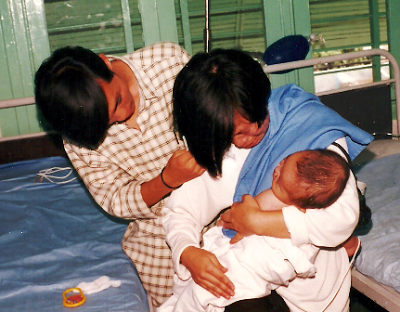
The baby was their first-born child. He was awake, but not crying . . .  just whimpering as he looked around for reassurance from his mommy. The doctor gently handed the baby to his mother, who was smiling from ear to ear as she took her child. Then, with the husband looking over her shoulder, the impact of the occasion slammed her. Her smiles turned to a look of disbelief and I could see her struggling, trying to determine if what she was seeing was for real, or was she just dreaming another haunting and cruel dream about having a perfectly normal baby?  She held the little guy tightly to her breast and then pulled him back up and looked straight into his face again. She could not hold the seven months of pent up emotion inside her any longer.  

She cried softly for a little while. The tears dropped down on the baby as she held him again to her breast. Then she pulled him back again and looked at him again and saw her own tears on the baby’s body and realized that the moment was not a dream. It was for real.  

Far gone now were the moments in the room where the baby was born and she had been handed the child for the first time. It had been there that the horror and disappointment had filled her mind, while at the same time, love for the precious child had filled her heart. Gone now were the long hours of rocking and walking the child, looking down at his face and questioning, “Why was my baby, my very first baby, destined to go through life like this? Did we do something wrong? Are we being punished?” There were never any answers to her questions before. But now, she was holding the beautiful baby of her dreams. She had loved him completely when he was deformed.  She now had the beautiful opportunity to love him completely, as he was whole.

The little boy’s brown eyes met the mother’s eyes and he tried to smile. That was more than she could handle. She sobbed. The young father reached into his pocket and pulled out a small dirty handkerchief.  He took the rag and began wiping the tears from the mother's face. He quietly cried. I cried freely. The tears seemed to be the telescopes that allowed us to see into heaven.  Something special had happened in that recovery room on that hot day in Ho Chi Minh. Jesus, the healer, had come to walk the halls of that hospital and touch the torn hearts of a young Vietnamese peasant couple. As I left the recovery room I could hear the mother begin to softly sing a lullaby to her child  . . . or was it angels that I heard singing?


Life's Finest

by Dr. James W. Jackson

Author, The Happiest Man in the World: Life Lessons from a Cultural Economist;

Recently, Winston-Crown Publishing Housepublished the book, “THE HAPPIEST MAN IN THE WORLD: Life Lessons from a Cultural Economist.” In using the term “happiest man,” I didn’t intend to write a treatise on the subject of “happiness.” I simply wanted to tell the unusual story of the phenomenon called “Project C.U.R.E.,” and share a bit of the privilege and excitement I experienced through being a part of the adventure. However, the term “happiness” has sparked some unexpected inquiries and has started at least a hundred conversations. Happiness is a pretty hot subject.

I have decided to pass on, in future articles, some of the comments and concepts that have been generated from our discussions regarding “happiness.” In a broad sense, I have concluded that “Life is full of alternatives, alternatives demand choices, choices set into motion consequences; how we reconcile and managethe consequences that have been set into motion by our choices will determine the level of our happiness.” Even if consequences are imposed upon us by others, yet, how we reconcile and manage those consequences that have been set into motion will determine our level of happiness.


Another concept regarding happiness has come through personal observation throughout my lifetime: “If a man tells me he is a ‘happy person,’ I try to discreetly find out from him the three people he has made happy, recently. If he is not engaged in making other people better off, then he is not yet truly happy, because he is still consumed with himself.”

Project C.U.R.E. (http://www.projectcure.org/) is a large organization that is viewed as a service vehicle, capable of fulfilling a person’s desire to help make other people “better off.” That intrigues me. We have over 12,000 volunteers throughout the U.S. actively engaged in collecting, sorting, inventorying, packing, and delivering medical goods that will be sent to thousands of clinics and hospitals in 123 countries around the world. The volunteers have a burning desire to help those needy people, even though they will probably never meet them personally or ever receive a “thank you” for loving and helping them. But, through the act of making other people happy, they have personally set into motion consequences that bring happiness back to them, the volunteers. Additionally, Project C.U.R.E.’s efforts to afford the volunteers an opportunity to make others better off have returned to bless Project C.U.R.E. immeasurably.

And now, for a more personal note, someone asked me recently, “What are some of the finest things you are experiencing as the ‘happiest man in the world?'” My answer was simple:

“Unfailing love and faultless fidelity from my mate is my Finest Treasure, 
Good health is my Finest Possession, 
A clear conscience is my Finest Friend, and, 
Assurance of spending forever and forever with my friends in heaven is my Finest Joy.”

How would you answer the question regarding your Finest Treasure, Finest Possession, Finest Friend and Finest Joy? Let’s get a dialogue started on your questions, thoughts and concepts about “happiness.” Who knows? . . . Maybe Winston-Crown Publishing House would like to tackle a new project on the subject of “Happiness.” Let’s share some ideas.


Take vs. Give

Following the collapse of the old Soviet Union, Project C.U.R.E. was pulled into the rescue and rehabilitation of the health care systems of the bankrupt Soviet. After assessing the hospitals, clinics and practices, we immediately began pouring in millions of dollars worth of donated medical goods from the US. We started with the corridor stretching from St. Petersburg to Moscow, but eventually shipped into the remaining republics. 

By 1998, I had worked my way to Tbilisi, the capital of the Republic of Georgia. While there, I traveled about forty miles north to the city of Gori, the birthplace of Joseph Stalin, where I met with city officials and medical directors. Throughout Georgia, the discouraged leaders were crying out for businessmen and leaders from the West to come and to teach them the ways of free market enterprise and entrepreneurial concepts. But, sadly, no one showed up in the old Soviet to help educate them, even though they were so open to new options of capitalism and the free market.

When I returned to Tbilisi, I was invited by the university to speak to all their graduate students. “Dr. Jackson, we want you to tell us about Project C.U.R.E., and humanitarians, and free market capitalism.” I jumped at the chance. The auditorium was packed with students and professors.

When I approached the podium I announced my lecture subject, “I want to talk to you today about the‘Economics of Compassion.’” In my presentation I explained that in the mid-1700s Adam Smith, a Scottish economist, proposed economic theories of freedom of choice, economic growth, division of labor, free market movement, self-determination and minimal government intervention.

About 100 years later Karl Marx said Adam Smith was wrong. In order for a society to be successful, Marx held that the economy needed to be controlled at the top by the Politburo and subsequently determined by intelligent people who knew what was best for the society. The only fair thing, according to Marx, was to take away from those who “have” and redistribute to those who “have not,” then there would be peace and equality. The economic experiment of Lenin, Marx, and Trotsky was even further complicated by Stalin’s insistence that aggravation of the class struggle was mandatory, and that political repression was necessary.

The Marxian model touted that the element of compassion was at the center of the philosophy. “We will overthrow the Czars, grab their wealth and equally divide it amongst the peasants.” But the driving force behind the philosophy was not compassion but control. It was not designed that everyone should be equal, because it would be the Politburo’s elite who would be in control and decide just who would be equal and just how equal each would be.

I went on to explain that the operative word in the whole scheme was the word“take.” “Take from those who have and distribute to those who have not.” The moral and emotional basis for the word “take” is a whole world apart from that of “give.”When “take” is employed, the spirit of “give” is trampled, compassion is thwarted and it is presumed that any “care- giving” activity is the responsibility of the state. The recipients of the “give” soon become entitled, addicted and controlled by the handouts of the Politburo. There certainly was no compassion in the word “take.” Words like concern, compunction, benevolence or compassion had to become foreign ideas.

Toward the end of my talk, I shared how free market enterprise had encouraged me to become a compassionate capitalist with the opportunities to help millions of needy people all over the world through humanitarian acts of kindness. “Your greatest fulfillment while living will be realized through your voluntary giving.”

I encouraged the listeners to cultivate kindness and personal compassion. “As you face new opportunities of freedom, you can now experiment with new financial and political concepts. Determine, as you earn and accumulate your wealth in the future, that your motivation will be the compassionate acts of kindness to others. But don’t allow the government to steal the compassion from your soul as it arbitrarily takes your earnings from your purse. Cultivate this concept and your beloved country of Georgia will blossom like a rose in a fertile garden.” Professors and students rose to their feet as one. All their lives they had experienced the debilitating phenomenon of being “taken.”